Barbă Victoria
Main achievement
Director of the Floricica cartoon studio 1977-1997
About
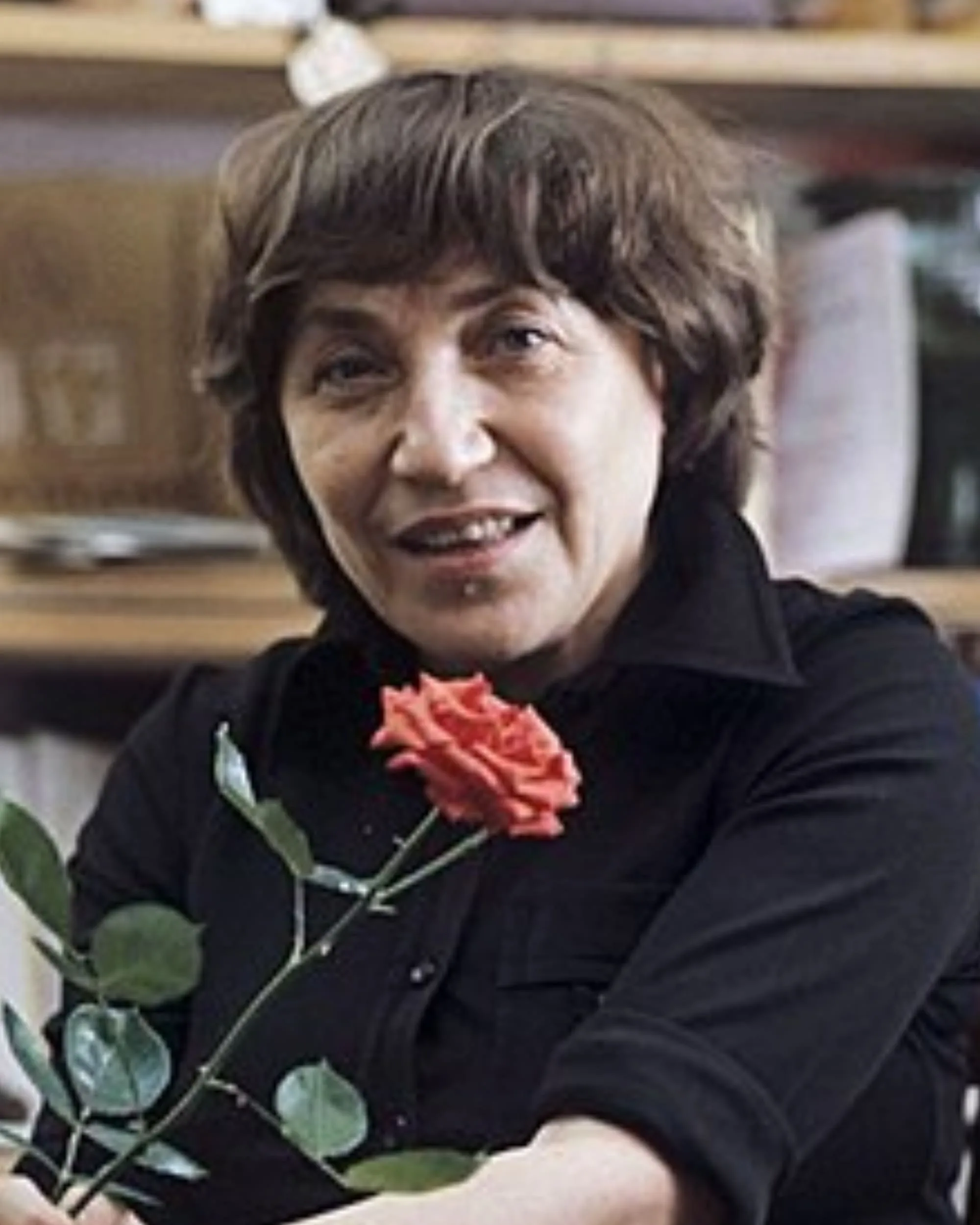
Victoria Ivanovna Barbă, born on September 19, 1926, in Tambov, Russia, was an outstanding director of animated films specializing in children's productions, and the founder of the world's first children's animation studio, "Floricica", established in 1967 in Chișinău, within the Pioneers' Palace. A graduate of the "V. Mukhina" Higher School of Art and Industry in Leningrad (now St. Petersburg) and the "Ion Creangă" State Pedagogical Institute in Chișinău, she began her artistic career as head of the Art Studio at the Pioneers' Palace in the Moldovan capital, later expanding her activities to Krasnodar. Under her leadership, the "Floricica" studio produced approximately 50-60 animated films on 16 mm film, which won awards at international festivals such as "Kinomarina" (Odesa), "UNICA" (the Netherlands), or "Zolotaya Rybka" (Moscow), using innovative techniques such as flat puppets, collage, and painted animation. From 1977 to 1997, "Floricica" operated as a creative subdivision of the "Moldova-film" studio, benefiting from professional 35 mm equipment, which allowed for the promotion of the films on national and international screens, and from 1997 it became the Children's Animation Creation Center, with Victoria Barbă as president. She directed and wrote screenplays for dozens of famous productions, such as "If You Believe in Fairytales" (1978), "Mărțișor – Spring Celebration" (1980), "Stop the Train!" (1982), "Hora of Stars" (1985), or "Song Without Words" (1993), frequently collaborating with her husband, Iosif Barbă, and shaping generations of young animators. Recognized as a member of the Union of Cinematographers of the Moldavian SSR (1980) and Honored Artist of the Republic of Moldova (1984), she received 98 diplomas, 19 awards (including 5 Grand Prix), and 8 gold medals at Soviet and Moldovan festivals, as well as international accolades, such as the award at the Tokyo Film Festival (2001). Of Megleno-Romanian origin on her father's side, from a family displaced from the Cadrilater to Dobruja after the Balkan Wars, Victoria Barbă left a profound mark on Moldovan animated cinema through the aesthetic education of children, often drawing inspiration from local traditions and authors such as Spiridon Vangheli. Her collaborations with "Moldova-film" and "Floricica" projected the films across all continents (except Australia), promoting moral and cultural values. She passed away on May 3, 2020, at the age of 93, leaving behind a living legacy, fondly remembered by former students, colleagues, and viewers who evoke the happy childhood spent alongside her magical creations.