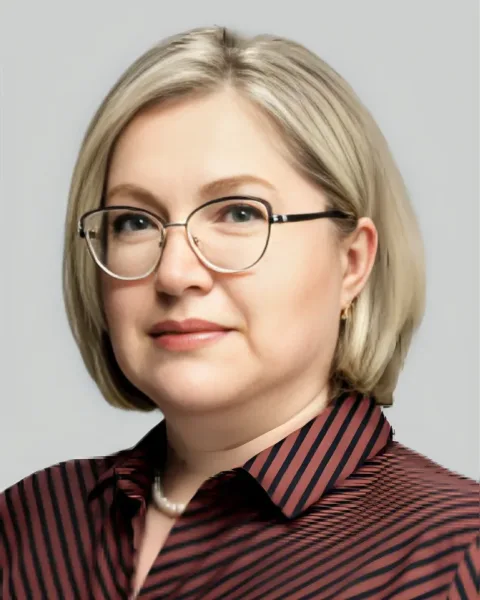
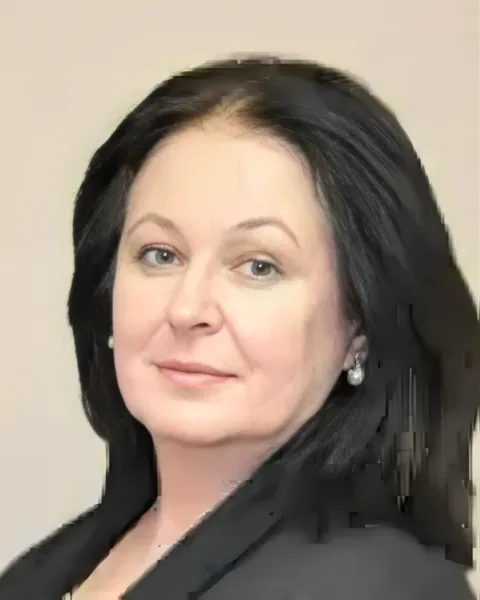
Natalia Bogdanova Matly is an outstanding human resources professional with an impressive career in the United States, where she has held leadership positions in renowned companies such as ContextLogic Inc., Wish, Ingredion Incorporated, Yelp, and Eli Lilly and Company. She began her career in organizational development consulting and employee relations, quickly advancing to roles such as Human Resources Business Partner and HR Director, focusing on talent management, leadership, and financial analysis. Holder of an MBA and certifications including Certified Professional Co-Active Coach (CPCC) and Leadership Circle Profile, she excels in building organizational cultures rooted in feedback, empathy, and high performance.
In addition to her HR expertise, Natalia has a diverse background, including experience as a professional basketball player in European teams such as Soller Joventut Marina and Nantes Reze Basket, as well as finance internships at UBS Investment Bank and MF Global. She is fluent in English, Russian, and Italian, with conversational Spanish, which has facilitated her international collaborations in multicultural environments. Active in the San Diego metropolitan area, California, she has contributed to organizational restructurings, team diversification, and leadership development programs, and is highly valued by colleagues for her proactive and empathetic approach.
Although detailed information about her personal life is not publicly available, her career demonstrates an inspiring transition from professional sports to business, highlighting the importance of perseverance and adaptability in the dynamic American business environment. As a successful businesswoman, Natalia represents a role model for future generations, promoting values such as self-awareness and conscious leadership in the human resources industry.
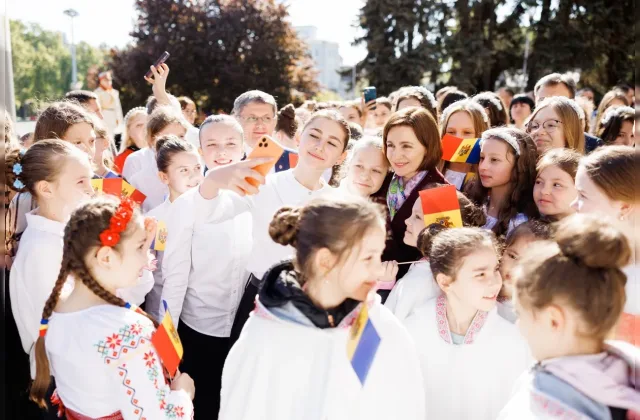
The Republic of Moldova ranks 36th among 181 countries included in the latest Women, Peace and Security Index, developed by the Georgetown Institute for Women, Peace and Security (GIWPS). With a score of 0.821, Moldova ranks ahead of several European countries, including Romania, Bulgaria and Italy. The Index assesses the status of women based on 13 indicators grouped into three key dimensions: inclusion, justice and security. The results reflect both the economic and social opportunities available to women and the level of legal protection and safety they enjoy. Moldova Continues to Rise in the Global Ranking Moldova’s position in the 2026 ranking reflects a significant improvement compared with previous editions of the Index. In 2018, the country ranked 87th globally. In both 2020 and 2022, Moldova moved up to 64th place, followed by a further rise to 53rd in 2024. Its current position at 36th therefore represents Moldova’s best result to date. With a score of 0.821, Moldova holds the highest position among the Eastern European countries included in this comparison. Romania ranks 43rd, Belarus 63rd, the Russian Federation 75th, and Ukraine 116th. Moldova performs particularly well in areas such as women’s access to education, participation in the labour market, mobile phone use, the absence of discriminatory legal provisions, and access to justice. At the same time, several areas still require further progress. These include women’s financial inclusion, representation in Parliament, efforts to combat domestic violence, and women’s perceptions of safety within their communities. Nordic Countries Continue to Lead the Ranking Northern European countries continue to set the global benchmark for women’s well-being, security and opportunities. Nordic countries occupy all five top positions in the ranking, reflecting consistently strong performance across the Index’s three core dimensions. Denmark tops the global ranking with a score of 0.939, followed by Iceland, Norway, Sweden and Finland. Their strong performance is driven by a combination of factors, including broad access to education, high levels of female labour-force participation, robust legal protections, access to financial services, substantial political representation and relatively low levels of violence. Strong public institutions and well-developed social protection systems also play an important role in reducing inequalities and creating favourable conditions for women’s full participation in economic and social life. Other countries among the leading positions include Luxembourg, Belgium, the Netherlands and Austria. Outside Europe, Australia and New Zealand continue to record strong results. Meanwhile, Costa Rica and Uruguay have entered the global top 50 for the first time, highlighting notable progress in Latin America in advancing women’s rights, security and well-being. Conflict and Instability Continue to Undermine Women’s Security At the other end of the ranking are countries affected by armed conflict, political instability and prolonged humanitarian crises. Among the lowest-ranked countries are Afghanistan, Yemen, the Central African Republic, Syria, Sudan, Haiti, the Democratic Republic of the Congo, Burundi, South Sudan and Myanmar. The Index points to a strong connection between exposure to armed conflict and deteriorating conditions for women. More than 70% of women living in the 12 lowest-ranked countries reside within 50 kilometres of an armed conflict zone. Under such circumstances, the risks of displacement, violence and abuse increase considerably, while access to justice, healthcare and protection mechanisms becomes more limited. Countries heavily affected by conflict also tend to perform poorly in areas such as maternal health and the ability of public institutions to safeguard women’s rights. International research similarly shows that periods of conflict and instability increase women’s vulnerability, particularly where public institutions lack the capacity to provide effective legal protection and adequate social services. The World Health Organization identifies violence against women as one of the most widespread human rights violations worldwide. What Does the Women, Peace and Security Index Measure? The Index developed by GIWPS goes beyond measuring equality between women and men. It examines a broad range of factors that directly influence women’s quality of life, from economic and political participation to legal protection and personal security. Through its 13 indicators, the Index assesses areas including economic inclusion, education, access to services, legal rights, political participation, and exposure to different forms of violence and insecurity. The results show that countries at the top of the ranking generally combine broad economic and social opportunities with effective institutions, strong legal protections and high levels of security. By contrast, countries experiencing prolonged conflict and instability often face multiple, interconnected challenges: economic opportunities are more limited, institutions are more vulnerable, access to essential services is restricted, and the risk of violence is significantly higher. Moldova’s rise from 87th place in 2018 to 36th in 2026 highlights the progress achieved in recent years. At the same time, the results point to areas where further efforts are needed, particularly women’s financial inclusion, political representation, the prevention of domestic violence, and improving women’s safety within their communities.
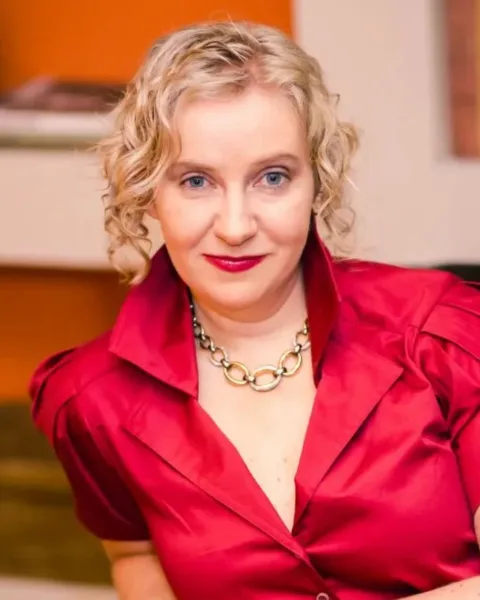
Ana-Maria Brînză, o tânără originară din Republica Moldova, a fost inclusă în lista internațională „Women of the Future 50 Rising Stars in ESG”, care reunește 50 de femei remarcabile din peste 30 de țări, cu impact semnificativ în domeniile mediului, responsabilității sociale și guvernanței. Selecția recunoaște femeile care contribuie la dezvoltarea unor inițiative inovatoare și sustenabile, promovând schimbarea pozitivă prin leadership, tehnologie și implicare socială. Ana-Maria este bursieră Chevening și urmează un program de masterat MBA la Universitatea din Edinburgh, unde se concentrează pe promovarea inovației responsabile și a leadershipului feminin. Ea este cofondatoarea primului program de mentorat dedicat femeilor din domeniul tehnologiei și a primului grup de studente la inginerie din Republica Moldova. Cu o experiență de peste șapte ani în analiza datelor și inteligența artificială, tânăra dezvoltă în prezent KUMA, un start-up bazat pe inteligență artificială generativă, care ajută familiile să păstreze și să transmită poveștile de viață între generații. Platforma transformă amintirile în formate precum podcasturi, cărți audio și documentare digitale. Prin activitatea sa, Ana-Maria promovează participarea femeilor în domeniul tehnologiei și susține dezvoltarea unor produse digitale construite pe principii de utilizare etică a inteligenței artificiale și guvernanță responsabilă. Echipa fondatoare a proiectului KUMA este formată integral din femei. Tânăra spune că această recunoaștere internațională reprezintă o onoare și o oportunitate de a face cunoscută Republica Moldova pe scena globală. „Aflându-mă aici, printre femei lideri din toată lumea, m-am simțit ca un mic ambasador al Moldovei. Am povestit cu mândrie despre oamenii, inițiativele și brandurile noastre și am vrut să arăt că țara noastră are mult potențial”, a declarat Ana-Maria Brînză. „Women of the Future 50 Rising Stars in ESG” este un program internațional care evidențiază femei cu vârsta de până la 35 de ani care schimbă modul în care sunt abordate problemele globale legate de sustenabilitate, incluziune și responsabilitate corporativă. Cele 50 de femei selectate reprezintă o nouă generație de lideri care promovează inovația, empatia și soluțiile durabile, demonstrând că progresul nu se măsoară doar prin rezultate economice sau tehnologice, ci și prin impactul pozitiv creat în societate.
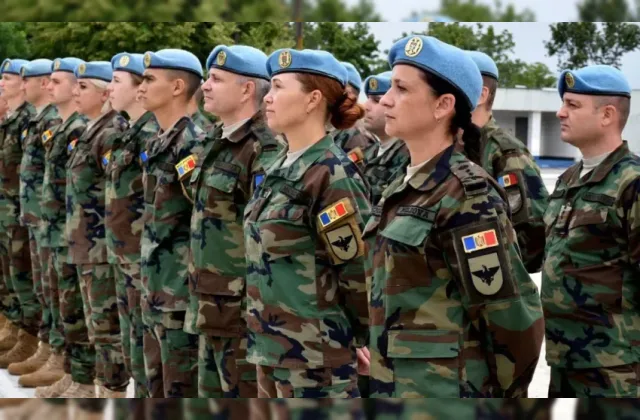
Republica Moldova se numără printre statele cu cea mai mare pondere a femeilor în forțele armate. Potrivit celor mai recente date colectate de NATO și de proiectul de cercetare Global Firepower, aproximativ 20% dintre militarii moldoveni sunt femei, ceea ce plasează țara în primele zece la nivel mondial. Prin acest indicator, Moldova se situează alături de țări precum Ungaria (20%) și Grecia (19%), depășind inclusiv Statele Unite ale Americii, unde femeile reprezintă aproximativ 17% din personalul militar. Clasamentul este condus de Coreea de Nord, unde femeile constituie aproximativ 40% din efectivele armatei, urmată de Israel, cu 38%. În cazul Israelului, procentul ridicat este explicat de obligativitatea serviciului militar pentru majoritatea femeilor. Pe locul al treilea se află Republica Africa de Sud, cu 24%, rezultat al politicilor de incluziune implementate după încheierea regimului apartheid. În multe state europene și nord-americane, unde armatele sunt formate în principal din voluntari, femeile continuă să fie subreprezentate, în pofida programelor de recrutare și promovare a egalității de șanse. NATO arată că reprezentarea femeilor în armatele statelor membre rămâne sub nivelul dorit. Conform raportului de sinteză al Alianței pentru anul 2025, femeile reprezintă, în medie, aproximativ 12–13% din efectivele militare ale statelor NATO. Doar câteva țări reușesc să atingă procente comparabile cu cele înregistrate în Israel sau Coreea de Nord. La nivel global, tendința este una de creștere a participării femeilor în serviciul militar. Tot mai multe state le oferă acces la funcții de comandă, specializări de luptă și domenii tehnice complexe. Chiar dacă echilibrul de gen este încă departe de a fi atins în majoritatea armatelor lumii, statisticile arată că rolul femeilor în forțele armate continuă să se consolideze, iar egalitatea de șanse devine o prioritate tot mai importantă în politicile de apărare.