 Education
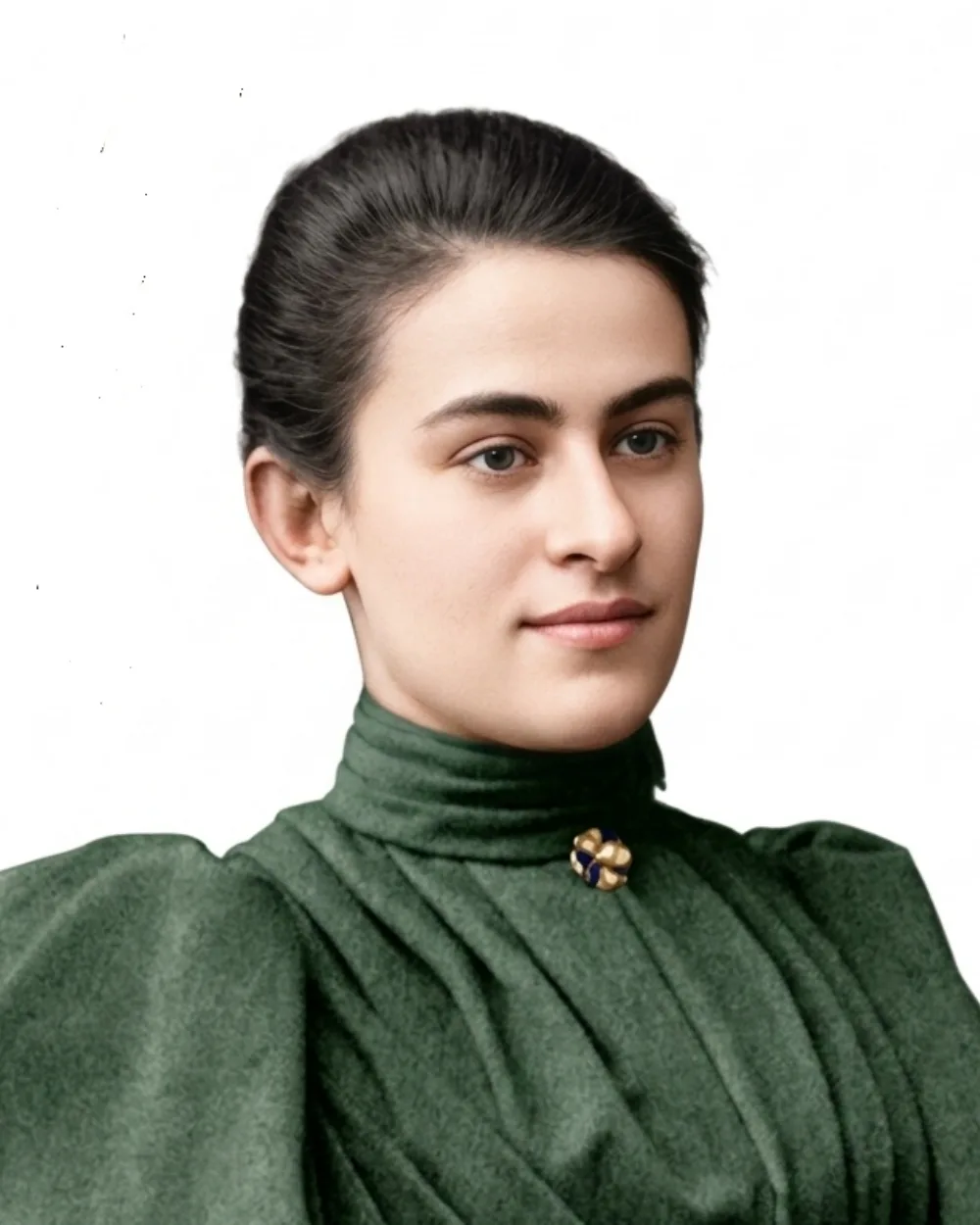
Tumarkin Anna
Main achievement
First female philosophy professor in Europe 1909.
About
Anna Tumarkin, born on February 16, 1875, in Dubrovno (present-day Belarus, part of the Russian Empire), was a Russian-born Jewish philosopher who became a pioneer of women's education in Switzerland. Initially educated as a teacher in Chișinău (Kishinev, in Bessarabia), she fled Tsarist Russia in 1892 to study philosophy at the University of Bern under the guidance of Ludwig Stein. She earned her doctorate in 1895, later studied in Berlin with Wilhelm Dilthey, and in 1898 became the first woman in Europe to achieve full university habilitation, allowing her to teach, examine doctoral students, and promote students. Her career at the University of Bern culminated in 1906 with her appointment as a full professor, and from 1909 to 1943, she was an ordinary professor of philosophy and aesthetics, being the first woman admitted to the university's Senate in 1910. Tumarkin collaborated closely with the University of Bern, where she taught for 45 years, contributing to its academic legacy with works such as *Wesen und Werden der schweizerischen Philosophie* (1948), in which she appreciated Swiss philosophy as being grounded in reality, as opposed to abstract systems. She actively participated in the women's rights movement, presiding over the network of Swiss women academics and getting involved in the Swiss Association of University Women, as well as the first Swiss National Exhibition for Women's Work (SAFFA) in 1928 alongside her life partner, Dr. Ida Hoff. Naturalized Swiss in 1921, she was honored with the Theodor Kocher Prize in 1937 for her exceptional contributions. Anna Tumarkin's personal life was marked by pain, her Jewish family suffering in Russian pogroms and Nazi terrorism, which intensified her dedication to her academic mission. She lived a celibate life, but with a close relationship with Ida Hoff, resisting discrimination with the motto: "Fate does not matter, but what we make of it." She passed away on August 7, 1951, in Muri bei Bern, leaving a legacy in the university library, celebrated in 2022 on the 150th anniversary of her birth as a role model for equality in science.