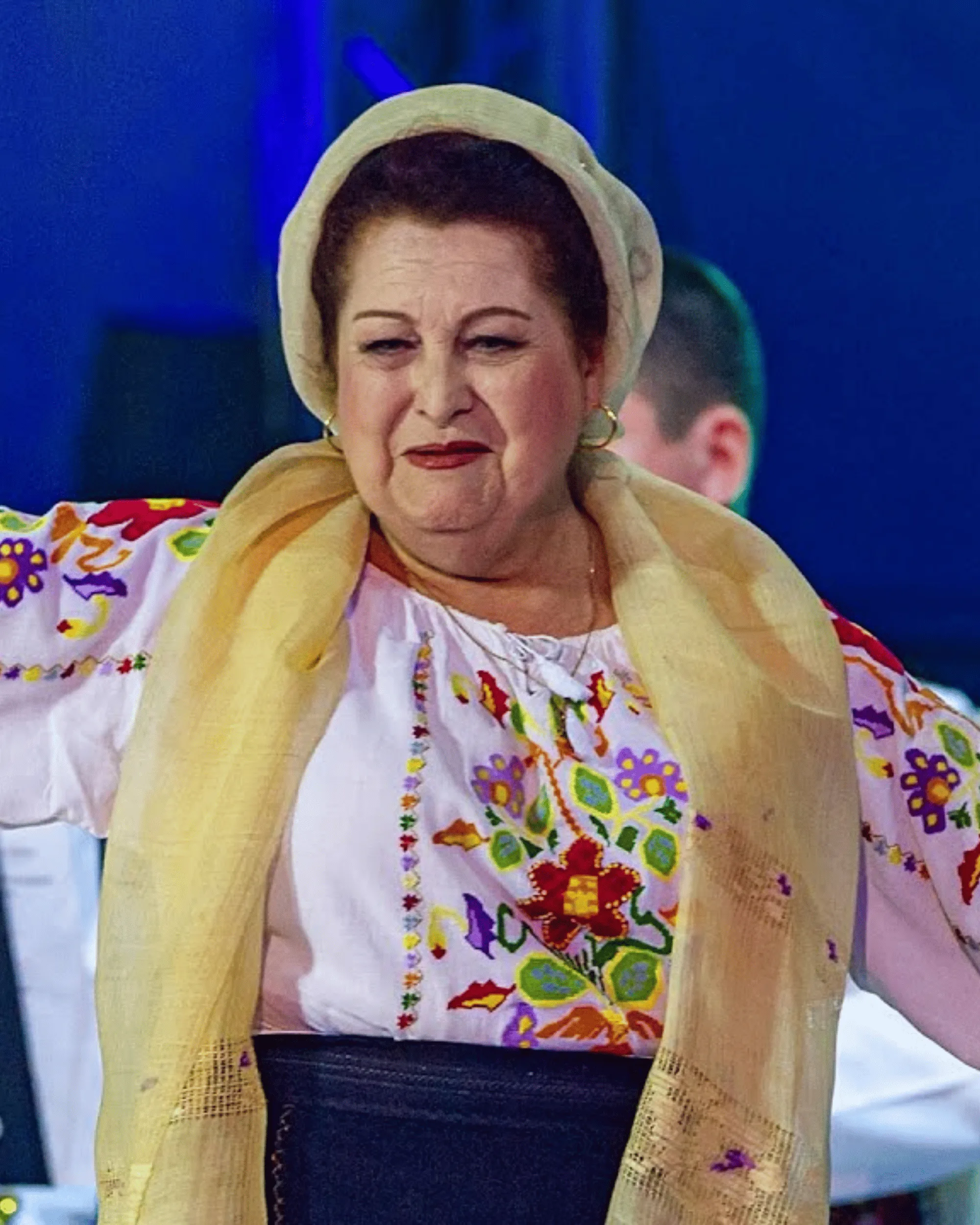
Sarabaș Maria
Main achievement
Performer. People's Artist. Collaborated with Lăutarii, Mugurel, and the Veselia ensemble.
About
Born on January 2, 1948, in the village of Câșlița-Prut, Vulcănești district. After graduating from the Pedagogical School in Cahul, where she took her first lessons in music theory, singing, and accordion, she studied at the Philology faculty of the Moldova State University from 1968 to 1974. At the age of 16, she recorded her first three songs at Radio Moldova (the "Luceafărul" program). From 1971 to 1974, she was a soloist with the "Lăutarii" folk music orchestra at the Chisinau Philharmonic. She worked as a literary editor at the Philharmonic (1974-1995) and at the concert and artistic management agency "Moldova-Concert" (1995-1997). Throughout her career, Maria Sarabaș collaborated with several folk music orchestras: "Miorița," "Folclor," "Doina Moldovei," "Busuioc Moldovenesc," "Ciocârlia," "Struguraș," "Veselia," "Basarabia," "Fluieraș," "Mugurel," "Trandafir de la Moldova," etc. She recorded folk songs at Radio Moldova, released CDs, cassettes, and a duet CD with the performer Arsenie Botnaru. Every nation has its national attire, it has music that distinguishes it from other nations, from other countries. Without music, there would probably be no life on earth at all. Music is a solace, a medicine for the soul, and a beautiful state of meditation. It is a state that takes you to a magical world, to a fairy-tale world, to a dream world... That would be music, and I believe that every person, when they are very sad and their soul is heavy, when they have troubles and sorrows, because that's life, with its ups and downs, if they listened to music, they would probably forget and heal both their soul and their body. In life, I have experienced extremely beautiful feelings related to music - abroad, as well as at home, when I admired, for example, the "Lăutarii", "Mugurel", "Fluieraș", "Folclor" orchestras... In 1996, I attended an International Folklore Festival where I listened to a girls' choir. They were from Japan. The concert took place in a church built around the 1400s, which was under reconstruction. However, a part of the church was functional, and the parishioners who came that day experienced not only the liturgy and the service being officiated there but also an extraordinary concert. There were 8 girls. They sang so beautifully, their unison was so well-knit, and they were young, beautiful, like marble statues. Their voices seemed non-human; you had the impression they were angels, fallen from heaven and placed there, near the church altar, to amaze us with those miraculous sounds they emitted. Music is the soul of a nation, it is its calling card, it is its secular roots, without which, probably, it would not be identified anywhere in the world.