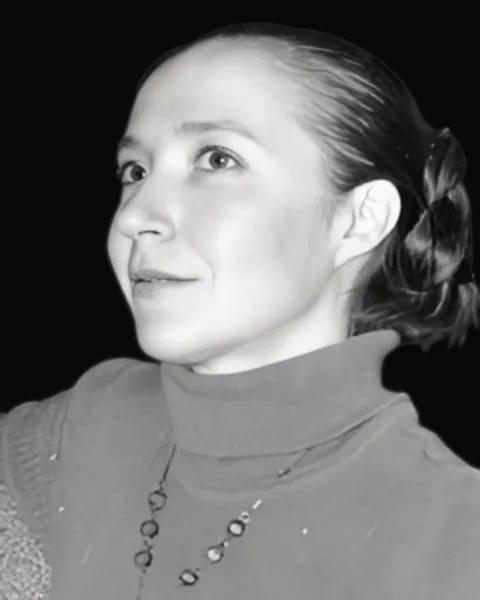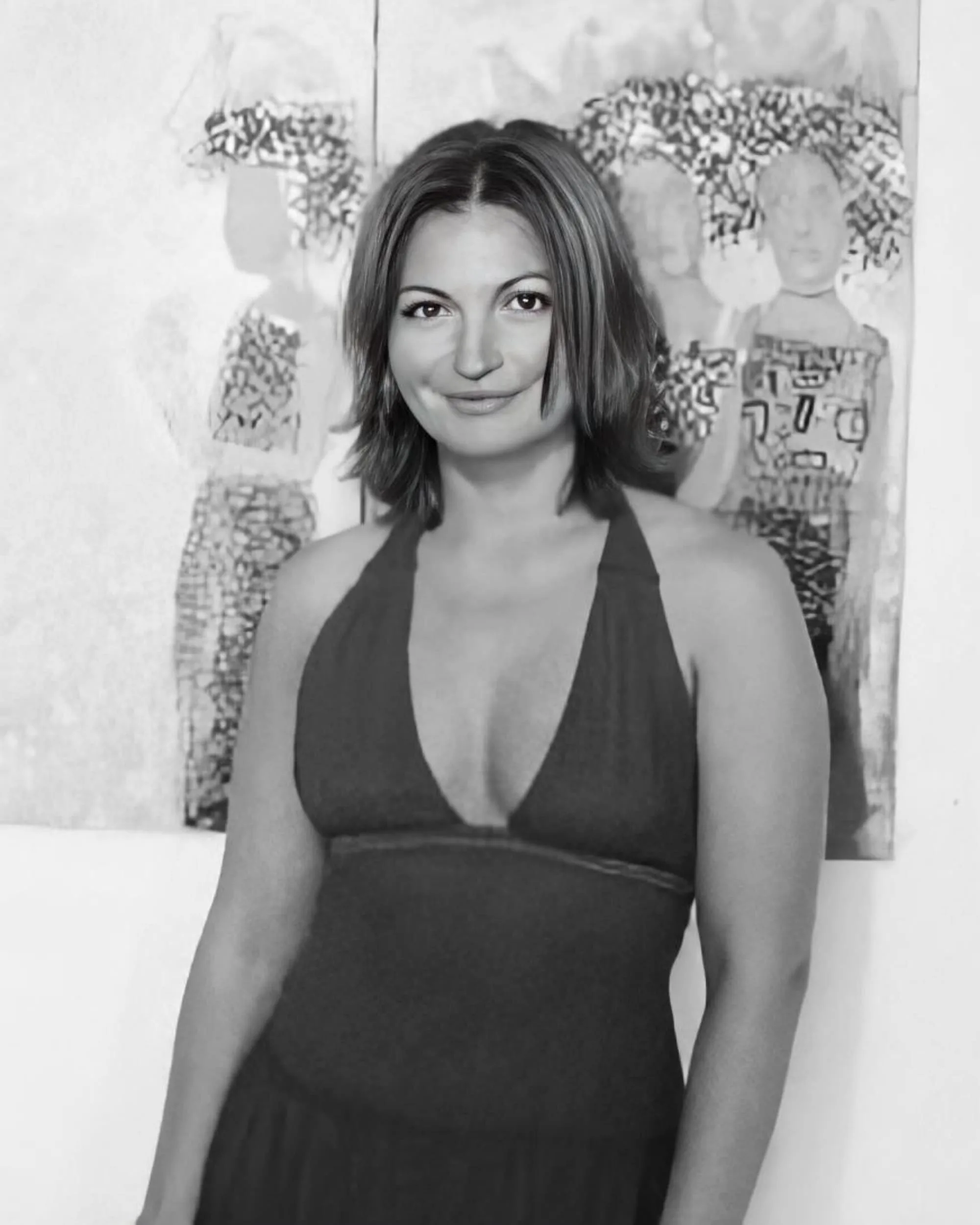
Bikir Natalia
Main achievement
Painter. Her paintings are imbued with the mystical fervor of the monasteries that dot the Moldovan landscape
About
Natalia Bikir, born in 1967 in the Republic of Moldova, is a painter renowned for her work that evokes an “inner Moldova,” a poetic universe inspired by her childhood, full of vibrant colors, Slavic symbols, and elements of folklore, such as red horses, blue birds, Orthodox monasteries, and women who act as guardians of memory. A top graduate of the Igor Vieru Academy of Fine Arts in Chișinău in 1989, having entered the school at just 12 years old, she developed a unique figurative style using hand-crushed natural pigments, such as lapis lazuli, and gold leaf to create depth and mystery, akin to Byzantine icons. Since her arrival in France in 1997, following a residency at the Cité Internationale des Arts in Paris in 1994, she has exhibited extensively in galleries such as Galerie Bénédicte Giniaux, at the Salon d’Automne, and in venues like Château de Pupetières, winning awards including the Grand Prix of the Salon d’Automne (1999) and the First Prize of the city of Sainte-Maxime (2011). Her achievements include participating in international exhibitions in France, Moldova, Romania, Russia, Hungary, Switzerland, Germany, the United Kingdom, Lebanon, and Morocco, where she enjoyed particular success. Her works are held in state collections such as the National Museum of Art of Moldova (six paintings), the National Museum of Fine Arts of Romania (three paintings), and French city halls in Orléans, La Rochelle, and Sainte-Maxime. A member of the Union of Artists of Moldova (1998), the Maison des Artistes in France (1999), and a member (sociétaire) of the Salon d’Automne in Paris (2000), she founded her own gallery and is listed in catalogs such as Akoun and Drouot, reflecting her recognition in the contemporary art world. Her painting, marked by graceful femininity, tenderness, and joy of life, combines textured oil paint and transparencies with motifs of animals, children, and musical instruments, evoking childhood tales and resilience to the historical traumas of her homeland. Based primarily in France, in Saint-Mandé near Paris, Natalia Bikir regularly returns to Moldova, maintaining close ties with her Latin and Francophile cultural roots, at the intersection of Ottoman, Byzantine, and Western civilizations. Although detailed information about her personal life is lacking in public sources, her intimate work suggests a profound sensitivity, nurtured by memories of Moldovan villages, holidays, and feminine hope, transforming the experience of exile into a living tribute to Moldovan identity in the context of contemporary European art.