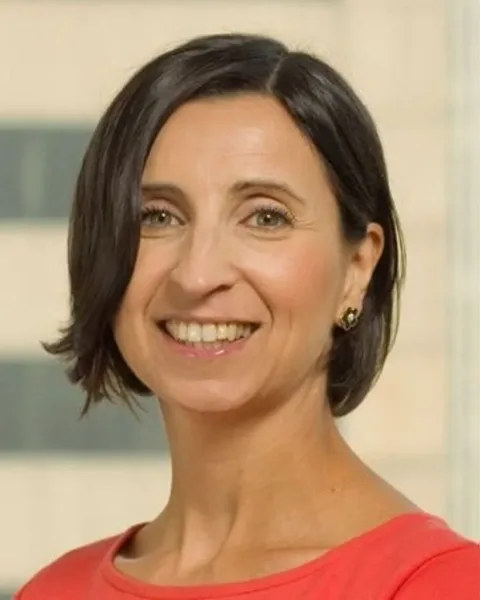
Zugravu Șoiliță Natalia
Main achievement
Professor at the Centre d’Etudes sur la Mondialisation, les Conflits, les Territoires et les Vulnérabilités (CEMOTEV), Université de Versailles Saint-Quentin
About
Natalia Zugravu-Șoiliță is a professor of economic sciences in France, at Université de Versailles Saint-Quentin-en-Yvelines, where she is active within UMI SOURCE and is associated with the Center for Studies on Globalization, Conflicts, Territories and Vulnerabilities (CEMOTEV). In her academic work, she focuses on political economy, international economics, and applied econometrics, with a special interest in sustainable development, climate change, and socio-economic vulnerabilities. She has taught courses such as economic policy and institutions, climate change and development, modeling sustainable development, and quantitative methods in economics. His university education reflects a solid and interdisciplinary background. He obtained his Habilitation à Diriger des Recherches from Université de Versailles Saint-Quentin-en-Yvelines in 2020, with research on globalization and sustainable development, following a PhD in Economic Sciences from Paris 1 Panthéon-Sorbonne University, defended in 2009, focusing on the relationship between growth, trade, foreign direct investment, and the environment in Central and Eastern Europe and the Commonwealth of Independent States. Previously, he completed a research master's degree in international economics, development, and transition, where he was recognized as the valedictorian, and his undergraduate studies were conducted at the Academy of Economic Studies of Moldova, in the field of international economic relations and Romanian-French-English interpretation. Through her research and teaching, Natalia Zugravu-Șoiliță contributes to understanding the relationship between economy, environment, and development in complex national and international contexts. Her scientific interests include economic and environmental valuation, energy dependence, gravity models, and new approaches to economic geography, with a focus on small island economies and public policies for sustainability. Publicly available information about her personal life is limited, but her professional journey shows a strong connection between her origins in the Republic of Moldova and an academic career built within the French university system, where she has established herself as a specialist in transition economies and sustainable development.