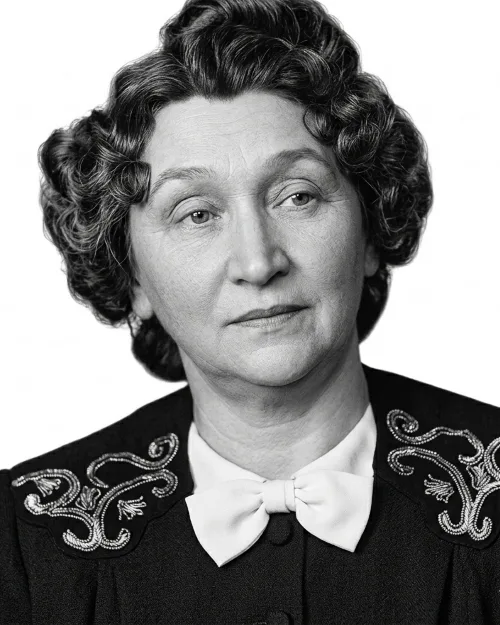
Schneersohn Nechama Dina
Main achievement
He occupies a central place in the history of the Habad-Lubavitch Hasidic movement, being a defining figure for the social continuity and stability of this community in the 20th century.
About
Nechama Dina Schneersohn (1881–1971) Nechama Dina Schneersohn holds a central place in the history of the Habad-Lubavitch Hasidic movement, being a defining figure for the continuity and social stability of this community in the 20th century. Born on October 24, 1881, in Chișinău, into a family of rabbis, she embodied the model of the "Rebbetzin" – the spiritual leader's wife – assuming the role of an anchor in the face of major historical challenges. Social Role and Influence Nechama Dina Schneersohn's social status transcended the limits of a simple administrative or domestic role; she became a pillar of community resilience. As the wife of the sixth Lubavitcher Rebbe, Yosef Yitzchak Schneersohn, her life was marked by the tumultuous transition from the Russian Empire to a new spiritual center in the United States. During this period of political and social instability for Jewish communities, she provided the necessary emotional and organizational support for preserving religious and cultural identity in the diaspora. She served as a bridge between generations of Hasidic leaders, being not only the mother of Chaya Mushka Schneerson (wife of the seventh Rebbe, Menachem Mendel Schneerson), but also a tutelary figure for the entire movement. Her social influence was exerted through the model of modesty, devotion, and inner strength she projected, becoming a benchmark for the role of women in the religious community. In an era when traditional structures were threatened by the forces of modernization and secularization, her prestige and character contributed to preserving the internal cohesion of the group. Legacy and Symbolism From a sociological perspective, her life illustrates how female figures within spiritual elites acted as guardians of tradition. Nechama Dina Schneersohn did not seek public exposure, preferring to exercise a discreet but profound moral authority. Her presence within the Schneersohn dynasty provided a structure of continuity that allowed the movement to adapt to new American realities without losing its Eastern European roots, including the connection to the cultural environment from which she came, Chisinau in the late 19th century. His death, which occurred in New York on January 7, 1971, marked the end of an era for the Lubavitch movement, but her model of "Rebbetzin" continues to serve as a role model for women within the Chabad community globally. She remains a symbolic figure for quiet strength and the ability to maintain spiritual vision during periods of historical transition.