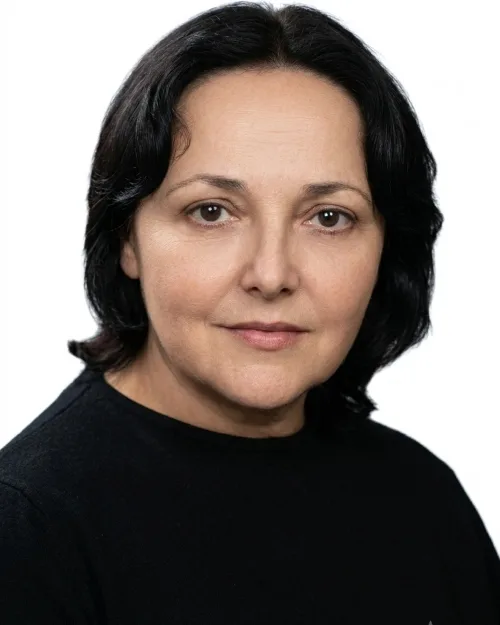
Șapoșnikova Sofia
Main achievement
Writer and poet, among the most appreciated in the Republic of Moldova
About
Sofia Shaposhnikova (1927–2018) was a remarkable writer and poet whose literary activity spanned several stages and cultural spaces, leaving a distinct mark on Russian-language literature, with a deep connection to the cultural environment of the Republic of Moldova. Here is a description of her cultural contribution, structured by the main levels of her career: 1. A Distinct Voice in Moldovan Literature The most fruitful period of her writing career is closely linked to Chisinau, where she settled and was active for several decades. As editor of the prose section of the prestigious magazine "Nistru" (later known as "Basarabia"), Shaposhnikova played an active role in revitalizing the local literary scene. Her contribution extended beyond her own creative work, as she became involved in the editorial process and the promotion of literature from the region. 2. Thematic and Stylistic Diversity Her work is characterized by remarkable versatility, addressing diverse literary genres that met the demands of the reading public of the era: Prose: She published numerous prose volumes (novels, novellas, and short stories), demonstrating an ability to move from everyday realism to detective fiction, exploring universal human themes and aspects of social life. Poetry: Starting in 1973, she consolidated her status as a poet, publishing volumes that reflect a profound lyrical sensibility and an evolution of poetic language. 3. Impact and Recognition Sofia Shaposhnikova's cultural contribution is confirmed by: Critical and Public Appreciation: Her books were printed in significant runs (some reaching 75,000 copies), indicating genuine popularity among readers. Interculturality: The translation of her works into Moldovan (Romanian), Ukrainian, and Polish languages highlights the cosmopolitan nature of her writings and her ability to resonate with a multicultural audience. Membership in the Writers' Union: As a member of the Writers' Union of the USSR, she was a figure integrated into the literary flow of the time, while also managing to maintain a distinct voice, marked by complex biographical experiences. 4. Continuity of Creation in Exile After emigrating to Israel in 1992, Sofia Shaposhnikova continued to write, demonstrating remarkable intellectual vitality. The publication of new novels and poetry collections (such as "Cartea de seară" - The Evening Book) in this late stage of her life demonstrates an uninterrupted commitment to literature, transforming the experience of emigration and memory into introspective and mature literary material. Conclusion: Sofia Shaposhnikova's cultural contribution can be defined by perseverance and adaptability. She was a writer who managed to combine her professional duties (writer, editor) with prolific creative activity, remaining a central figure in the literary landscape of Chisinau in the second half of the 20th century and succeeding in maintaining the continuity of her writing in a completely new cultural context, in Israel. Her work remains a testament to the evolution of Russian literature in the Eastern European space and to a human sensibility capable of transcending geographical borders.