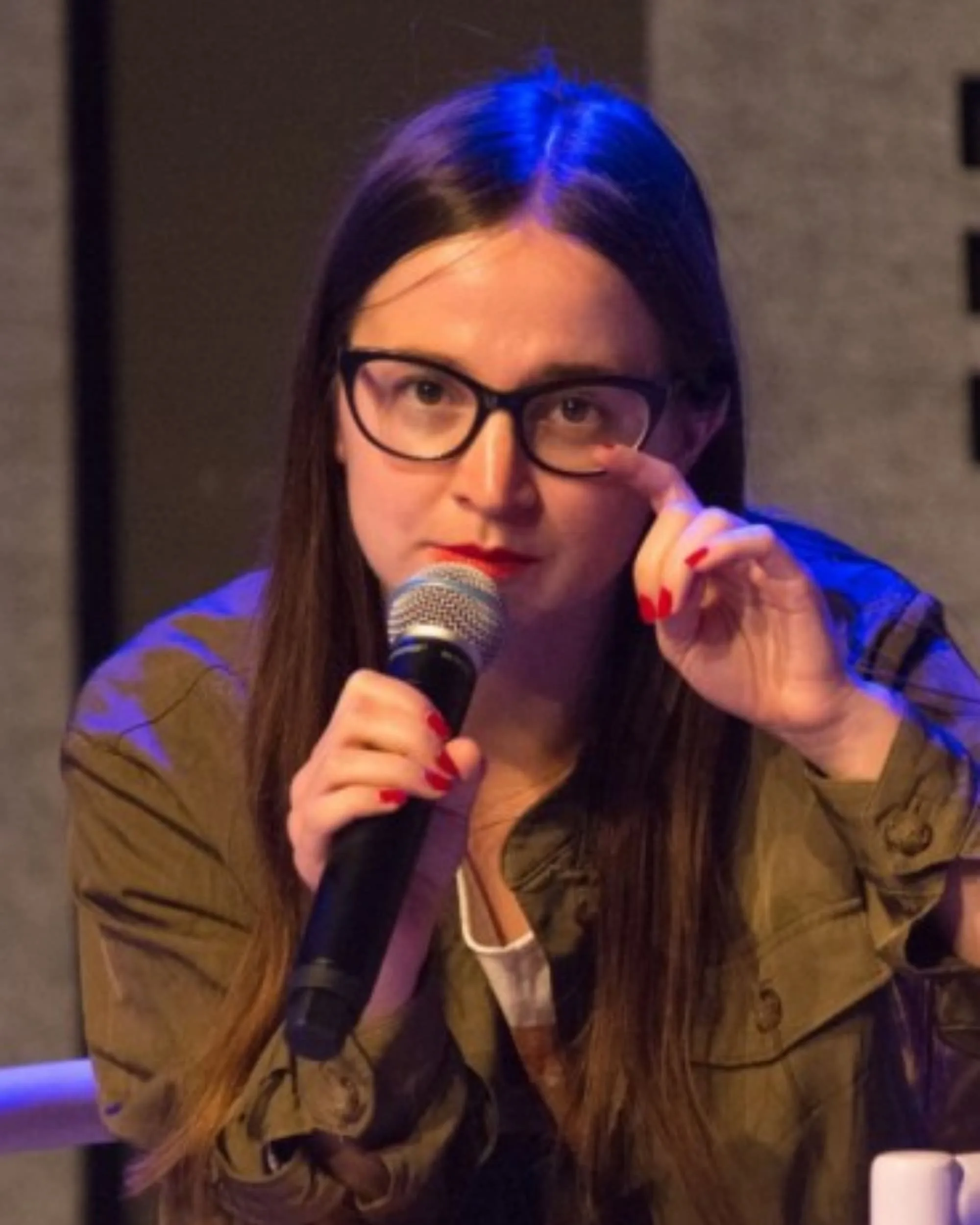
Erizanu Paula
Main achievement
Young Writer 2021 for the novel Ard pădurile, organized by the Gala of Young Writers, Bucharest
About
Paula Erizanu, born in 1992 in Chișinău, is a remarkable writer and journalist, with an impressive career in literature and international press. Her literary debut, the diary "This is my first revolution. Steal it from me" (Cartier, 2010), dedicated to the 2009 protests in Moldova, won the UNESCO Germany Prize for the Most Beautiful Book of the Year. This was followed by the poetry collection "Take Care of Yourself" (Charmides, 2015), and the novel "The Forests are Burning" (Cartier, 2021), a historical fiction about Soviet feminists Alexandra Kollontai and Inessa Armand, which earned her the Young Writer of the Year award at the Gala of Young Writers in Romania and nominations for awards such as Sofia Nădejde and the Festival du Premier Roman in France. She also co-edited the anthology "A Century of Romanian Poetry Written by Women" (Cartier, 2019-2021), together with Alina Purcaru. As a journalist, Paula Erizanu has collaborated with prestigious publications such as The Guardian, Financial Times, London Review of Books, BBC World Service, Novaya Gazeta, and others, where she wrote about politics, culture, and events in Eastern Europe, including Moldova, Ukraine, and Romania. Between 2019 and 2022, she was the Culture Editor at The Calvert Journal, where she initiated projects such as "100 Books to Read from Eastern Europe and Central Asia" and "After the Fall: 30 Years Since the End of the USSR." She also worked at the Institute of Art and Ideas, CNN International, Times Higher Education, and other institutions in the UK, and was nominated in 2019 for the Culture Journalist of the Year award in the UK's Words by Women Awards competition. A graduate of New College of the Humanities (BA in History, Literature, and Art History) and City University London (MA in Journalism), Paula Erizanu lived in London for ten years but recently returned to Chisinau, from where she reports on regional events. She is fluent in Romanian, Russian, English, and French, and her work reflects a generation involved in the post-Soviet transition, promoting female voices and Eastern European perspectives on the international stage. Recently, she presented projects about the human stories of Moldovans from various ethnic groups at literary festivals, such as the one in Ruse.