Imber Lya
Main achievement
Doctor. Vice-President of UNICEF. The first lady from Venezuela to obtain the title of Doctor Habilitat in Medical Sciences.
About
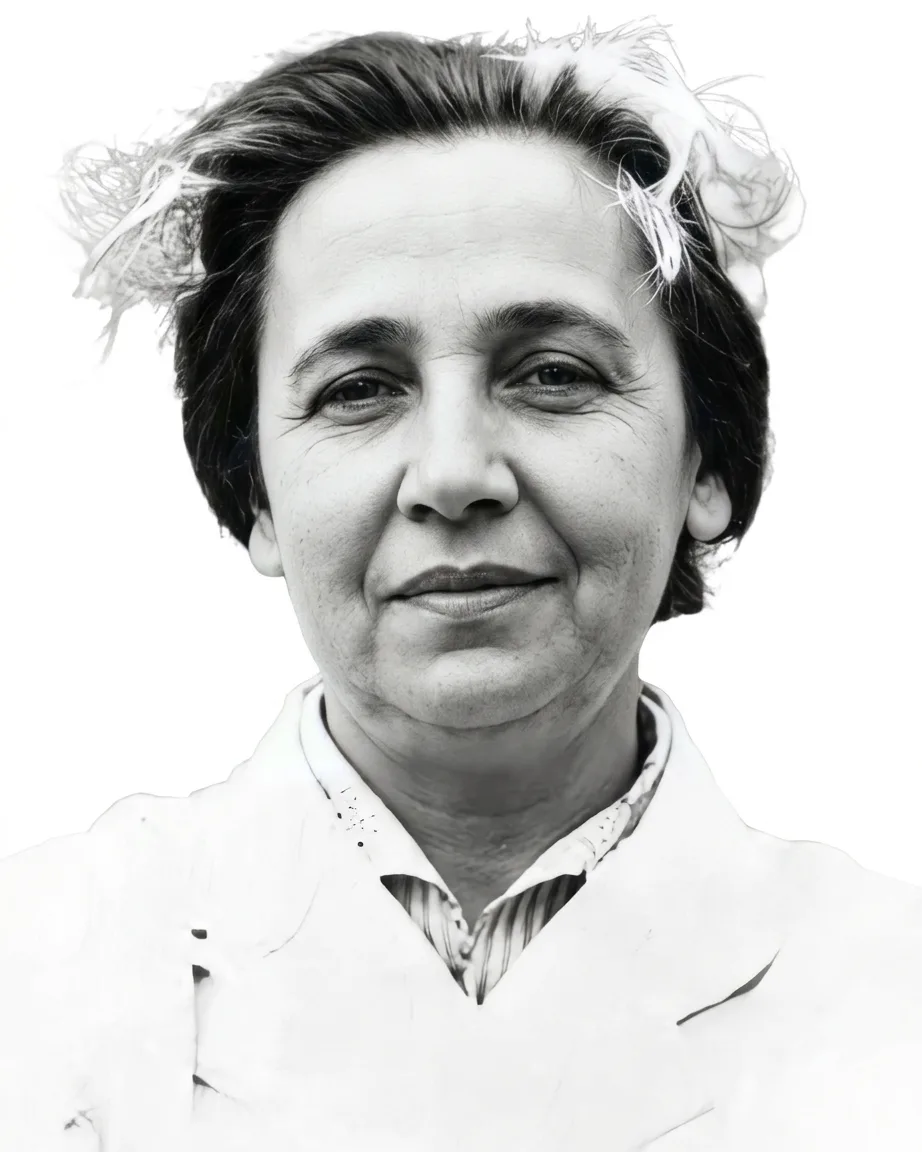
Lya Imber de Coronil, born on March 17, 1914, in Odesa, Ukraine, later settled in Soroca, emigrated in 1930 to Venezuela with her family, becoming the first woman to obtain a Doctorate in Medical Sciences from the Central University of Venezuela in 1936. Specializing in pediatrics and child care, she founded the Venezuelan Society of Pediatrics, where she held leadership positions, including president from 1949-1951, and contributed to the establishment of the J.M. de los Ríos Children's Hospital in Caracas, where she was the first female director (1968-1971). Among her major achievements are numerous scientific publications, such as the study on infant mortality due to tuberculosis, the treatment of bilharziasis, and popular science articles in the press on hunger, breastfeeding, and children's mental health, promoting a holistic approach to child health in the context of developing countries. She collaborated with key institutions such as the Ministry of Health of Venezuela, where she worked in laboratories and pediatric services, and the J.M. de los Ríos Children's Hospital, where she led mental health and hygiene services. She was vice-president of UNICEF, president of the Venezuelan League for Mental Hygiene (1972-1976) and of the Board of Directors of the International Union for Child Protection in Geneva, representing Venezuela at international congresses. As a full professor of Pediatric Clinic at the Central University of Venezuela, she introduced the teaching of child care in the school curriculum, authorizing the first school textbook in the field, and promoted social pediatrics, linking childhood illnesses to socio-economic factors. Born into a family of intellectuals from Bessarabia – her father Naúm Imber, mother Ana Barú, and sister Sofia Imber, founder of the Museum of Contemporary Art in Caracas – Lya married her fellow student, physician Fernando Rubén Coronil, in 1938. They had two children: María Elena, a psychologist, and Fernando, an anthropologist. Although she faced discrimination as a woman in the male-dominated academic environment, she excelled through her polyglotism (Russian, French, Romanian, Spanish, German, English) and dedication, receiving distinctions such as the Order of Andrés Bello and the Medal of the Venezuelan Society of Pediatrics. She passed away on September 13, 1981, in Caracas, succumbing to lung cancer, leaving a pioneering legacy in medical sciences.