Music
MusicCojocaru Valentina
Main achievement
Folk music performer. Decorated with the Order of the Republic. Has over 200 songs recorded
About
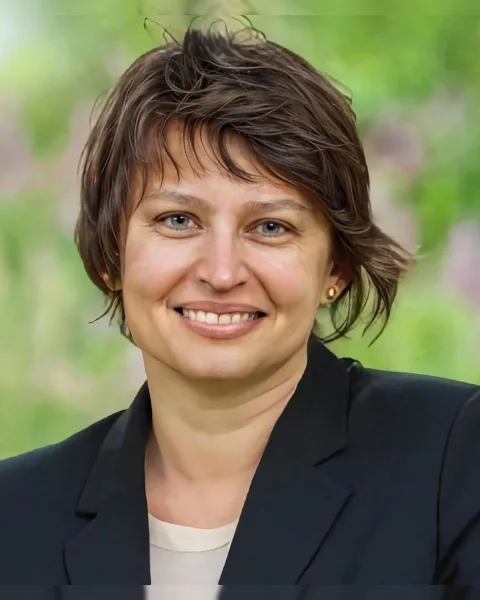
Valentina Cojocaru, born on February 20, 1947, in the village of Ciuciulea, Glodeni district, is a renowned folk music performer from the Republic of Moldova, with a career spanning over 60 years marked by her dedication to traditional melodies. She graduated from the Pedagogical School in Călărași, where she studied the domra, and later from the "G. Musicescu" Institute of Arts in Chișinău, specializing in choral conducting. Her artistic debut took place in 1962 as a soloist with the amateur orchestra "Ciobănaș" from Călărași, continuing with estrada ensembles, the "Mugurel" orchestra (1968-1974), the "Folclor" Popular Music Orchestra of National Radio and Television (1974-1990), and the "Lăutarii" Ensemble of the National Philharmonic (1990-1992). Her rich repertoire includes dance songs, doinas, ballads, and romances, collaborating with composers such as Tudor Chiriac, C. Rusnac, Gheorghe Mustea, and V. Doni. One of her most representative performances is the ballad "Miorița" in a modern arrangement for organ, voice, and bells, designated by UNESCO in 1987 as the most successful musical work at the George Enescu International Competition. She has recorded over 200 songs at Chișinău Radio Broadcasting, three records at the "Melodia" label in Moscow, and has undertaken numerous international tours in countries such as Denmark, France, Cuba, Greece, Ethiopia, and Japan, promoting Moldovan folklore on foreign stages. She received prestigious distinctions, including the title of Merited Artist in 1978, People's Artist in 1989, the "Civic Merit" Medal in 1993, the "Labor Glory" Order in 2005, and the Order of the Republic in 2010. Coming from a family of renowned musicians, she was influenced by her mother's songs, forming a memorable duet with Nicolae Glib, with hits such as "Cine joacă băsmăluța" and "Fă, Marie, cu bărz". Today, she remains an emblematic figure of Moldovan folk music, working as a freelancer and inspiring generations through her passion for tradition.