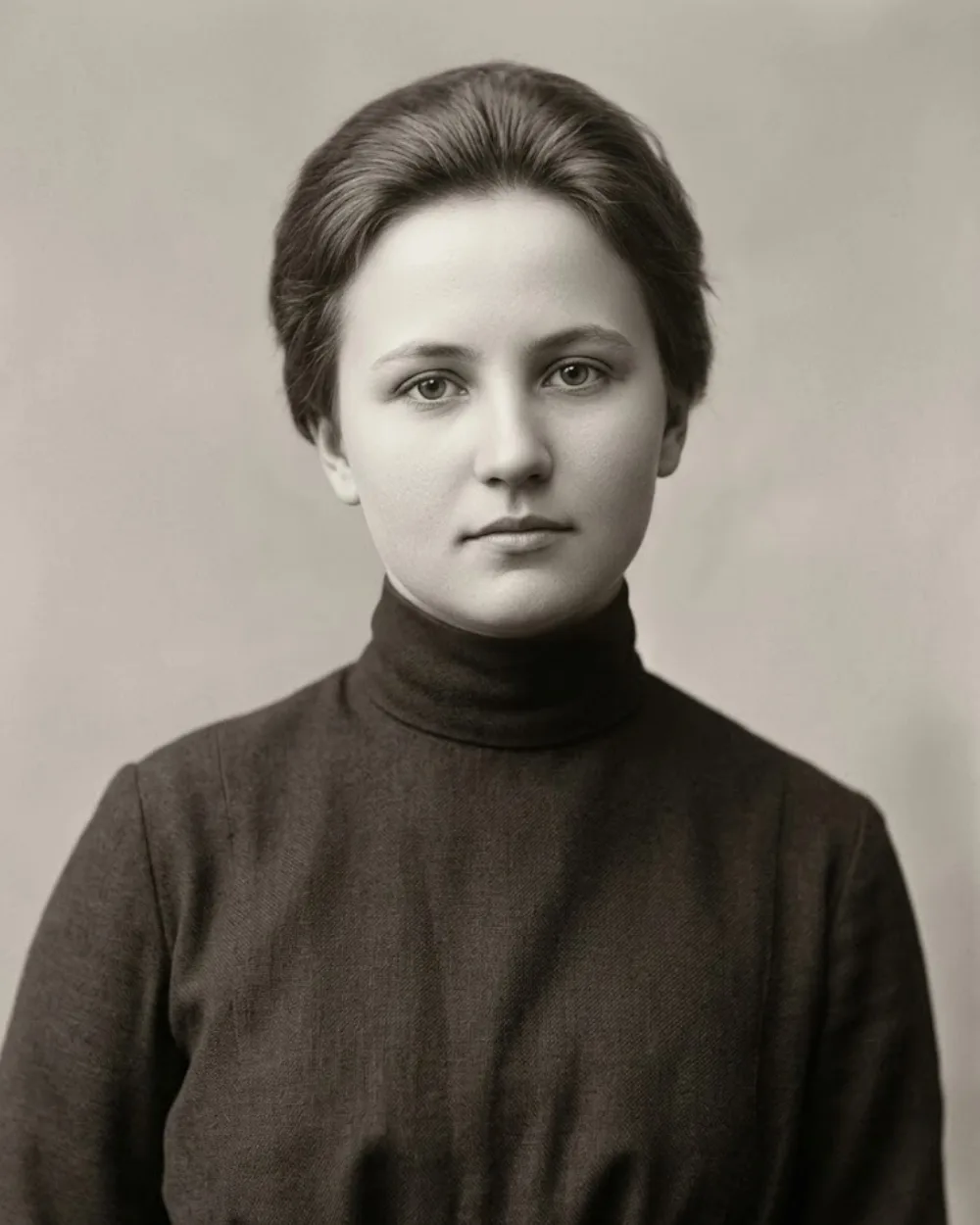
Arionescu Baillayre Lidia
Main achievement
Painter. Her works can be classified under the genres of neo-impressionism and postmodernism.
About
Lidia Arionescu-Baillayre, born on March 22, 1880, in Chișinău, was an outstanding Bessarabian painter whose works belong to the styles of Neo-Impressionism and Post-Impressionism. She first studied at the Chișinău Drawing School in the studio of V. Ocușco, and then at the prestigious Imperial Academy of Arts in St. Petersburg in the studio of I. Dmitriev-Kavkazsky, from which she graduated in 1907 alongside colleagues such as V. Donchev and her future husband, Auguste Baillayre. Her creations focused on still lifes, portraits, landscapes, and flowers, and she participated in important exhibitions such as "The Impressionists" in Vilnius (1909–1910), the second exhibition of the "Union of Youth" in St. Petersburg (1911), and local events in Chișinău in 1908, 1920, and 1933. Following her marriage to French painter Auguste Baillayre in 1907, with whom she closely collaborated in avant-garde circles, Lidia lived in Petrograd until 1918, contributing to the introduction of modern trends into Bessarabian art. Together with her husband, she was a member of the first experimental artist society, the "Union of Youth" in St. Petersburg, and exhibited works such as "Flowers", "Dutchmen", "Portrait", and "Landscape". Having returned to Chișinău after the union of Bessarabia with Romania, the couple left a significant mark on the local art scene through retrospective exhibitions and the influence of the avant-garde in the first half of the 20th century, with their works being preserved in collections such as the National Museum of Art in Chișinău. Lidia Arionescu-Baillayre passed away prematurely in 1923 in Chișinău, at just 42 years of age, leaving behind a daughter, Tatiana Baillayre, who inherited her passion for painting. The daughter of the gubernatorial secretary Ioanichie Panteleimon Arionescu and Ana Grigoriev, Lidia lived a life dedicated to art during a turbulent period marked by political and cultural transformations in Bessarabia. Their legacy persists through works displayed in exhibitions such as "Artist Couples" and through her pioneering role in promoting modernism in the Republic of Moldova.