Opera
OperaVelter Nadejda
Main achievement
Mezzo-soprano. She studied opera at the State Conservatory of Leningrad, Russian Federation.
About
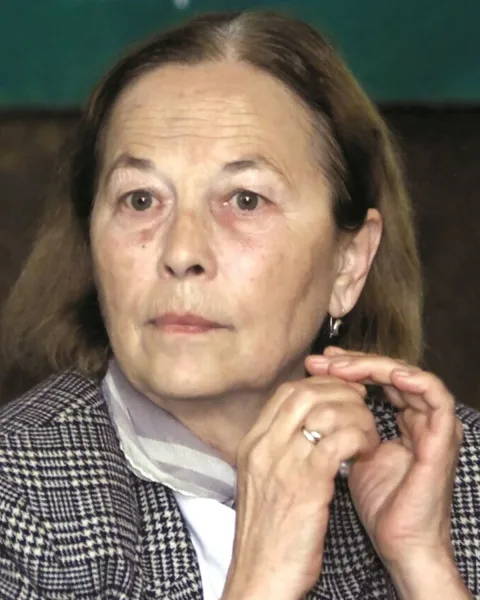
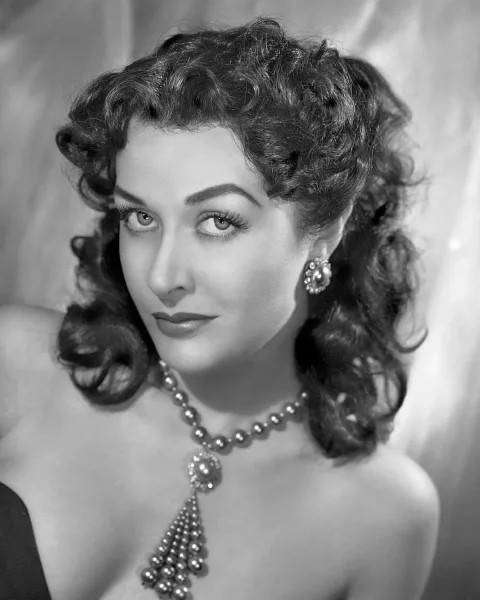
Nadezhda Velter received her classical education at the Alexandrinsky Institute for Noble Maidens, the oldest boarding school in Tambov for girls from noble families. She completed her studies in 1918, the year the institute closed. After surviving the difficult years of the Civil War, Velter entered the Rostov Conservatory, receiving her diploma in 1927. She sang for two years at the Baku Opera, and from 1929 settled in Leningrad. After a season with the People's House Opera Company, Nadezhda Velter became a soloist at the Maly Opera Theater (Mikhailovsky), where she remained until 1944. She sang Lyubasha in The Tsar's Bride, Marina Mnishek in Boris Godunov, the Countess in Meyerhold's production of The Queen of Spades, and Amneris in Aida. But one of Velter's most important roles was Carmen, a role that particularly highlighted her exceptional acting talent. Velter also performed in contemporary productions, appearing as Sonetka in the premiere of Shostakovich's Lady Macbeth of Mtsensk, Aksinya in Dzerzhinsky's Quiet Don, and Nilovna in Zhelobinsky's Mother. Welter also sings excerpts from the operas "Carmen" and "The Mother," as well as romances, on the stage of the Grand Hall of the Philharmonic, where she performs with the orchestra under the baton of Alexander Gauk, Nikolai Rabinovich, and Boris Khaikin, in combined chamber programs and in concerts given by masters of the arts. One of these took place on January 1, 1944, during the Siege of Leningrad, which Welter spent in Leningrad while continuing to work. The singer participated in front-line brigade concerts, which brought together artists from the Kirov (Mariinsky) Theatre and the Maly Opera Theatre who had remained in the city. She performed on the radio, appeared in chamber and symphonic concerts on the stage of the Grand Hall, and began directing – she staged Eugene Onegin and The Queen of Spades at the Siege Theatre. Her first production was Carmen, in which Welter also sang the lead role. Adapted for the concert stage, the performance took place in the Grand Hall of the Philharmonic on July 1, 5, and 19, 1942, under the direction of Semyon Arkin, concertmaster of the Symphony Orchestra of the Radio Committee. The set designer was Nadezhda Velter's husband, Georgy Zorn. In 1944, the singer joined the Kirov Opera and Ballet Theatre, which had returned from evacuation. There, on November 3, 1946, she sang the Duenna at the premiere of Prokofiev's opera, under the baton of the theatre's principal conductor, Boris Khaikin. With him, the singer would make her last appearance in the Grand Hall: on January 14, 1954, in a program dedicated to the 150th anniversary of Glinka's birth, Nadejda Velter performed the duet Naina and Farlaf from Ruslan and Lyudmila alongside Lavrenty Yaroshenko. Nadejda Velter would write a fascinating memoir about her long and difficult life, "About the Opera Theatre and Myself," published in 1984 by the Leningrad branch of the Soviet Composers' Publishing House. On December 10, 1984, a concert commemorating the singer's 85th birthday was held in the Glinka Small Hall: seated in the front row, the singer accepted congratulations.