Țhurbaeva Vera
Main achievement
Mezzo-soprano. Active within the Mariinsky Ballet, North Ossetian branch
About
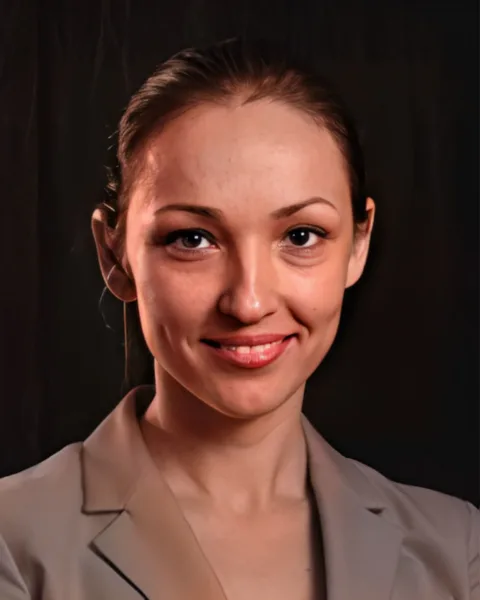
Vera Tzurbaeva, a remarkable mezzo-soprano from Chisinau, Republic of Moldova, has distinguished herself with her exceptional vocal talent on the stages of Russian opera. Born in the Moldovan capital, she graduated from the Vladikavkaz College of Arts, named after the great conductor Valery Gergiev, where she studied under the guidance of professors D.R. Bryuker and G.S. Grigoryan. In 2017, she made an impressive debut on the stage of the Concert Hall of the Mariinsky Theatre branch in the Republic of North Ossetia-Alania, performing the solo alto part in Pergolesi's "Stabat Mater" mass, alongside the Symphony Orchestra and Choir conducted by Evgeny Kirillov. From that moment on, she became a soloist of the opera company of this prestigious institution, captivating audiences with a rich and varied repertoire. Her stage repertoire includes memorable roles such as Olga in "Eugene Onegin," Cherubino in "The Marriage of Figaro," Ines in "The Troubadour," Angela in "The Demon," the High Priestess in "Aida," the Little Bandit Girl in "The Snow Queen," Musilda in "The Cat Musil," the Dog in "Morozko," Dimitri in "Fiodora," Laura in "Iolanta," and Lola in "Peasant Honor." In concerts, she has performed parts from operas such as Giannetta in "The Love Potion." Since 2021, she has continued her development as a student at the Department of Musical-Theatrical Art of the State Institute of Arts in Nalchik, under Professor N.K. Gastasheva, consolidating her vocal technique and expressiveness. She actively participates in major cultural events, including tribute evenings dedicated to Ossetian personalities, such as the 160th anniversary of the birth of the poet Kosta Khetagurov. Vera Tsurbaeva's artistic life is marked by providential encounters, such as the one with the renowned vocal pedagogue Larisa Gergieva, who confirmed her mezzo-soprano timbre and guided her professional trajectory. She describes the theater as a "second home" and emphasizes her luck in being integrated into the opera company immediately after graduation, where she constantly benefits from valuable advice. Although she has established herself professionally in the Russian Federation, her Moldovan roots remain a source of inspiration, and her career demonstrates the potential of artists from the Republic of Moldova on major international lyrical stages, contributing to the promotion of opera in the North Caucasus region.