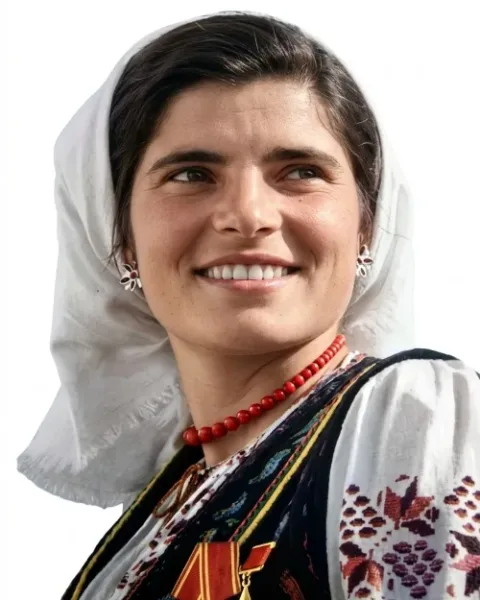
Stepanov Irina
Main achievement
Associate Professor at University of Minnesota. Division of Environmental Health Sciences
About
Irina Stepanov, a remarkable scientist originally from the Republic of Moldova, has distinguished herself through her impressive career in public health and cancer prevention in the United States of America. A graduate of Moldova State University, where she obtained her Bachelor's degree in Chemistry in 1997 and her PhD in 2002, she became a Distinguished McKnight University Professor and Mayo Professor in Public Health at the University of Minnesota School of Public Health. Her research focuses on biomarkers of exposure to carcinogens from tobacco and pollution, contributing to regulatory policies, including proposals for the FDA on reducing toxic substances in tobacco products, and to understanding cancer risk differences among populations. As Director of the Institute for Global Cancer Prevention Research at the Masonic Cancer Center, Irina Stepanov collaborates with prestigious institutions such as the University of Minnesota School of Public Health, Medical School, and international partners, including Tata Memorial Hospital in India. She is a member of Master's and Doctoral programs in Molecular Pharmacology and Therapeutics, as well as the American Association for Cancer Research and the Society for Research on Nicotine and Tobacco. Achievements include the Delta Omega Public Health Honorary Society award (2013) and Masonic Scholar (2011), and her laboratory develops innovative mass spectrometry methods to study human-environment interactions, promoting cancer prevention in low- and middle-income countries. Her academic training in Moldova, where she received the State Prize for Young Researchers in 2002, was followed by postdoctoral training at the University of Minnesota Masonic Cancer Center. Although detailed information about her personal life is not public, her contributions highlight a commitment to global health equity, addressing the disproportionate burden of cancer on vulnerable populations, and she continues to inspire by building international research capacity in public health education and policy.