Art
ArtSpirer Rozalia
Main achievement
Architect. He designed a large part of the city of Bălți after the Second World War.
About
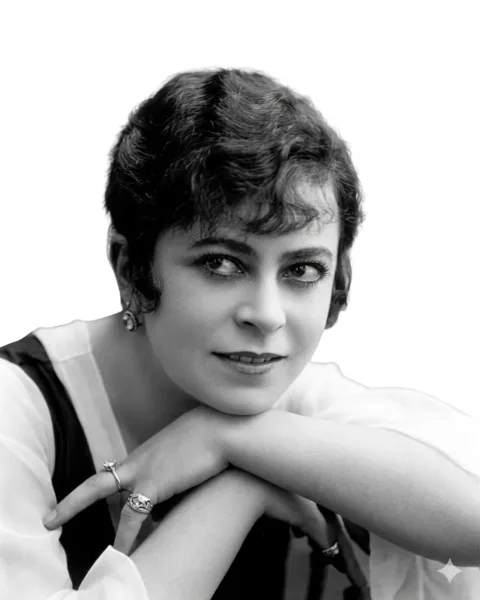
Etti-Rosa Spirer (1900–1990) was the first female architect in Bessarabia, an emblematic figure of Moldovan architecture during the interwar and postwar periods. Born in Galați into a family of intellectuals, she graduated from the Higher School of Architecture in Bucharest and settled in Bălți in 1932, where she became the only architect with higher education in the municipality. During the period 1932–1940, Spirer designed and restored numerous buildings of public importance and educational institutions, among which the most remarkable are the "Ion Creangă" Boys' High School, the "Domnița Ileana" Girls' High School, and the reconstruction of the Bodescu House for the Prefecture's headquarters. Her works belong to sober modernist architecture, creating a valuable stylistic cohesion for the urban landscape of Bălți, which is preserved to this day. After World War II, Spirer returned to Chișinău, where her work focused on the reconstruction and modernization of the capital. Under the coordination of academician Alexei Șciusev, she supervised the restoration of the former "Suisse" Hotel (now the "B.P. Hasdeu" Municipal Library), designed the reconstruction of the "Sfatul Țării" Palace, and participated in the redesign of important administrative buildings. She also worked at the "Moldgiprostroi" institute, where she designed residential blocks and medical institutions, including experiments with monolithic reinforced concrete and slipform construction, an advanced technology for that period. Recognition of her merits came over time, including the "Labor Reward for School Construction" Medal (1936). Her participation in the First All-Union Exhibition of Soviet Architects in 1948 established her on a national level. Her career demonstrated not only remarkable technical competence but also a woman's ability to assert herself in a male-dominated profession, leaving a significant architectural legacy in both Bălți and Chișinău, where numerous public and residential buildings bear the imprint of her urban vision and design skill.