Education
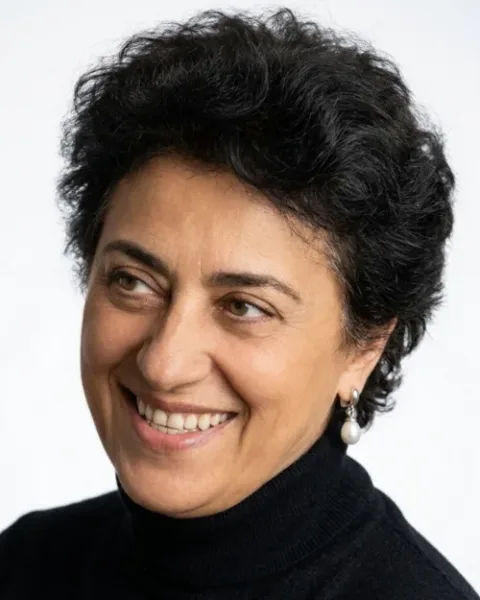
Mahlina Svetlana
Main achievement
Member of the International Academy of Informatization. Honored Worker of the Higher School of the Russian Federation
About
Svetlana Mahlina was born on April 16, 1941, in Chisinau, in the Moldavian Soviet Socialist Republic, into a Jewish family, the daughter of Tevel Zelman-Șneerovici Mahlin and Gulia Iosifovna Nudelman. During World War II, her family was evacuated to Uzbekistan, and later returned to the region. She graduated from the Chisinau Institute of Arts in 1965, majoring in piano, and later from the I. E. Repin Institute of Painting, Sculpture, and Architecture in Leningrad in 1969, majoring in history and theory of fine arts, as well as postgraduate studies at the Leningrad Conservatory. Her teaching career began in Petrozavodsk and Leningrad, and since 1975 she has been working at the Saint Petersburg State Institute of Culture, where she is a professor in the department of theory and history of culture, vice-rector for scientific research (1993-2002), and a member of the dissertation council. Svetlana Mahlina's academic achievements are remarkable: she obtained her Doctor of Philosophy degree in 1992 with the thesis "The Language of Art in the Context of Culture," following her Candidate degree in 1974, and has been a university professor since 1993. She is an Honored Worker of the Higher School of the Russian Federation (2002), a member of the International Academy of Informatics, the Public Academy of the History of Culture of St. Petersburg, the Union of Artists, and the International Association of Art Critics (AICA). She has published dozens of monographs, textbooks, and articles in fields such as cultural semiotics, aesthetics, contemporary artistic culture, and music pedagogy, including "Sign, Symbols, and Codes of Eastern and Western Cultures" (2018) and "Dictionary of Cultural Semiotics" (2009), significantly contributing to cultural education in the Russian Federation. Although detailed information about her personal life remains limited in public sources, Svetlana Mahlina has demonstrated exemplary dedication to higher education for over 50 years, teaching disciplines such as the history of culture, semiotics, and linguistics, and actively participating in interdisciplinary projects. Her career illustrates the trajectory of a remarkable woman from Moldova who has integrated Moldovan artistic expertise into the Russian academic context, promoting universal cultural values through the lens of semiotics and art criticism.