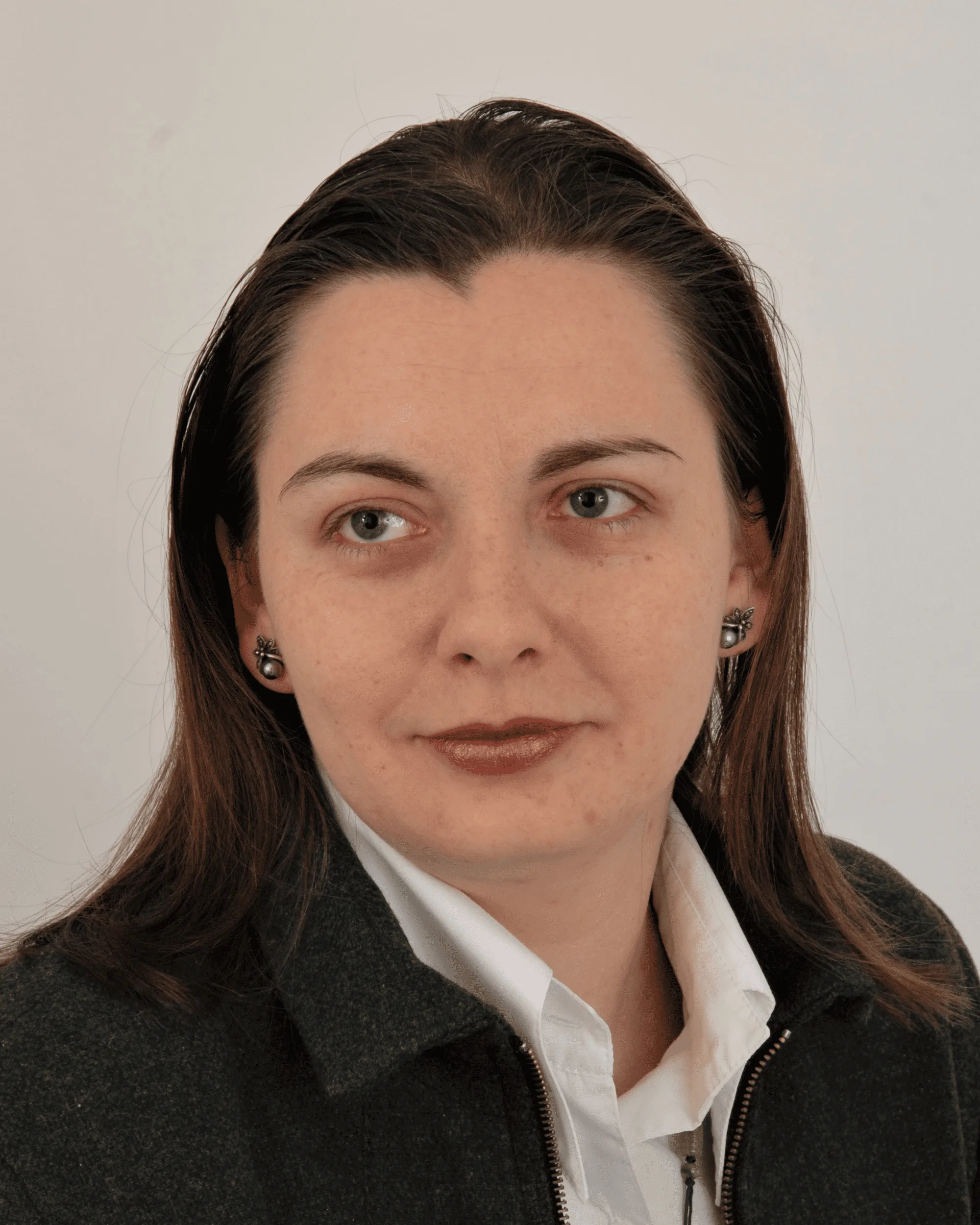
Irimciuc Olga
Main achievement
Translator. Collaborates with the University of Insubria (Como). She also teaches Romanian language and literature at the European School in Varese.
About
Olga Irimciuc is a remarkable professional in Romanian and comparative literature, originally from the Republic of Moldova, with an impressive career in academia and literature. She obtained her doctorate in 2006 at the Academy of Sciences of the Republic of Moldova, having graduated from the Università degli Studi di Milano in foreign languages and literatures (Russian and French), the Università di Bergamo in human rights and the ethics of international cooperation, and the Università degli Studi di Torino in modern languages and literatures (Romanian and Russian). She has published volumes such as "La letteratura romena nella Repubblica Moldova," a thematic study on the evolution of Romanian literature in the post-war Moldovan space, "Attore anonimo," and "Sfidando la globalizzazione," exploring cultural identity and spiritual resistance in oppressive contexts. Her teaching activity includes teaching at the State University of Moldova and current collaborations with the Università degli Studi dell’Insubria in Como, where she teaches Russian language and culture courses within the Interlinguistic and Intercultural Mediation Sciences program. She also teaches Romanian language and literature at the Scuola Europea di Varese, developing innovative teaching strategies for multicultural contexts. As a translator, she has brought the works of great Moldovan authors, such as Grigore Vieru and Nicolae Dabija, into Italian, winning the Translation Award at the "Grigore Vieru" International Poetry Festival in 2012. Her publications are edited by Graphe.it, and book presentations, such as the one at the Moldovan Embassy in Rome in 2025, highlight her role in promoting border literature. Based in Italy, Olga Irimciuc represents a cultural bridge between the Republic of Moldova and the European space, contributing to the visibility of the Moldovan minority through profound analyses of the Romanian artistic imaginary. Although information about her personal life remains discreet, her trajectory reflects a deep dedication to preserving Romanian cultural identity in the diaspora, in a context of globalization that challenges traditional values. Through her work, she not only documents but also revitalizes the literary heritage of Bessarabia, inspiring new generations of readers and researchers.