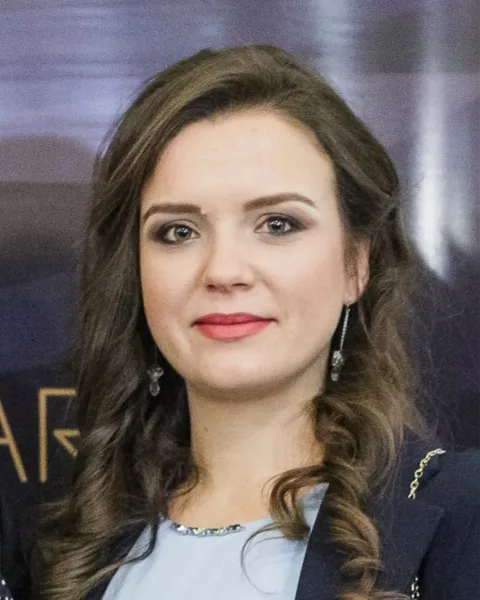
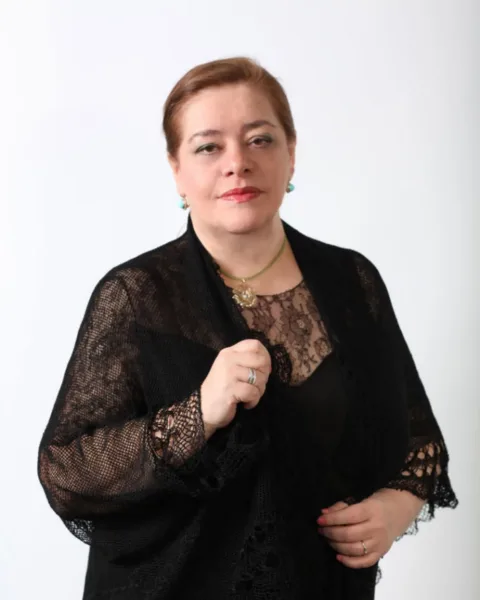
Vieru Doina
Main achievement
French painter with exhibitions in Ecuador, Mexico, France, Romania, and Moldova
About
Doina Vieru, a visual artist originally from Chisinau, Republic of Moldova, born in 1978, has distinguished herself through creations that explore the unspeakable, the game of hide-and-seek, and the tension between image and word. She studied at the Academy of Music, Theatre, and Fine Arts in Chisinau, then at the École Nationale Supérieure des Beaux-Arts in Paris, later completing degrees in psychology and educational sciences at Paris 8 University. Her works, created in series using various techniques such as oil, watercolor, ink, tar on canvas, PVC, or metal, address personal themes like pregnant women, Tchaikovsky's Opus 35 rhythm, or the obsessive search for black, culminating in recent series such as "Ré-écriture du désastre" or "Petricor." She has exhibited extensively in galleries like Nesle (Paris), Sara Palacios (Quito), Ileana Viteri, and participated in international biennales, including the Chisinau Painting Biennale. Her international career was marked by a 20-year period in Ecuador, where she lived on a mountain in Quito, developing an artistic language influenced by mountain and jungle landscapes, before returning to Paris in 2019. She has collaborated with institutions such as the Embassy of the Republic of Moldova in Paris, which supported the opening of her 2020 exhibition at Galerie Nesle, Alliance Française, the Ecuadorian Cultural Center (CCE), and galleries such as Bruno Massa (Paris and Tbilisi). Awarded the San Antonio Sculpture Biennial Prize (Ecuador, 2012) and the Guyasamin Prize from the Municipality of Quito, her works have been acquired by museums such as the CCI in Ibarra and exhibited in countries such as France, Ecuador, Mexico, Romania, Moldova, South Korea, Georgia, and China. Doina Vieru's personal life is closely linked to her work, which includes reflections on intimate tasks and experiences, suggesting motherhood as a recurring theme. Now based in Paris, where she lives and works, the artist maintains close ties with her Moldovan origins through participation in cultural events in Chisinau and book illustrations for Romanian and Francophone authors such as Luminitza C. Tigirlas or Stéphane Vinolo. With a style marked by "bartlebyism" – a preference for images over words – she continues to exhibit actively, contributing to the promotion of contemporary Moldovan art globally.