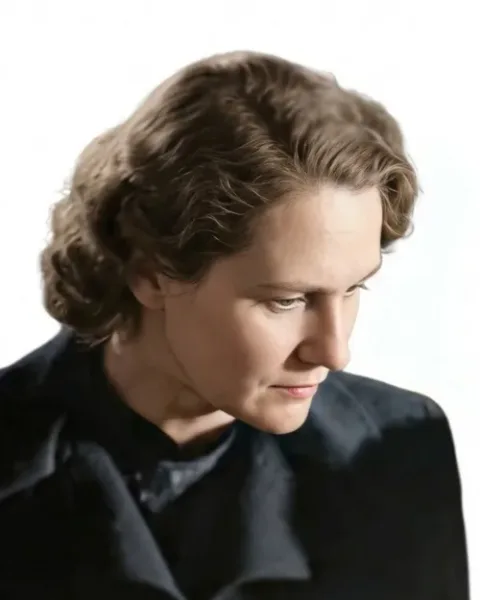
Terlețchi Nadejda
Main achievement
Educator, cultural activist, and an emblematic figure of Bessarabian intellectual life at the end of the 19th and beginning of the 20th centuries.
About
Nadejda Terlețchi was a distinguished educator, cultural activist, and emblematic figure of Bessarabian intellectual life at the end of the 19th and beginning of the 20th centuries. Born in 1870, in the village of Zarojani, Hotin county, she pursued her high school studies in Chișinău, an institution where she acquired a solid intellectual education, typical of the female elite of the era. Her pedagogical career was defined by dedication and excellence. Between 1887 and 1925, she served as the director of Primary School No. 5 in Chișinău, shaping numerous generations under the sign of professional rigor and profound spiritual culture. Beyond her teaching activities, she stood out through active participation in teachers' congresses in the Russian Empire, being recognized for her oratorical talent and journalistic strength. His civic engagement extended beyond the school sphere. He collaborated closely with Daria Harjevschi on major cultural initiatives, such as organizing popular theater and public readings. His home became a pillar of national resistance, serving as the headquarters for the newspaper and magazine "Cuvânt moldovenesc" (1913–1917), under the auspices of Pan Halippa and Nicolae N. Alexandri. His personal relationship with the publicist Nicolae N. Alexandri (1859–1931) was a central element in the latter's intellectual activity, influencing his lines of thought. Nadejda Terlețchi showed a constant concern for philanthropy, acting in the spirit of Christian morality. During periods of social crisis, she actively involved herself in supporting Transnistrian refugees, often acting beyond her official responsibilities. Although she lived and passed away in discretion, her intellectual legacy remains a benchmark in the history of Bessarabian pedagogy. Although her grave is located in the Central Cemetery on Armenească Street in Chișinău, the absence of an identifiable funerary monument at present constitutes a gap in the preservation of her historical memory, with current documentation efforts aiming to re-establish her meritorious contribution in public consciousness.