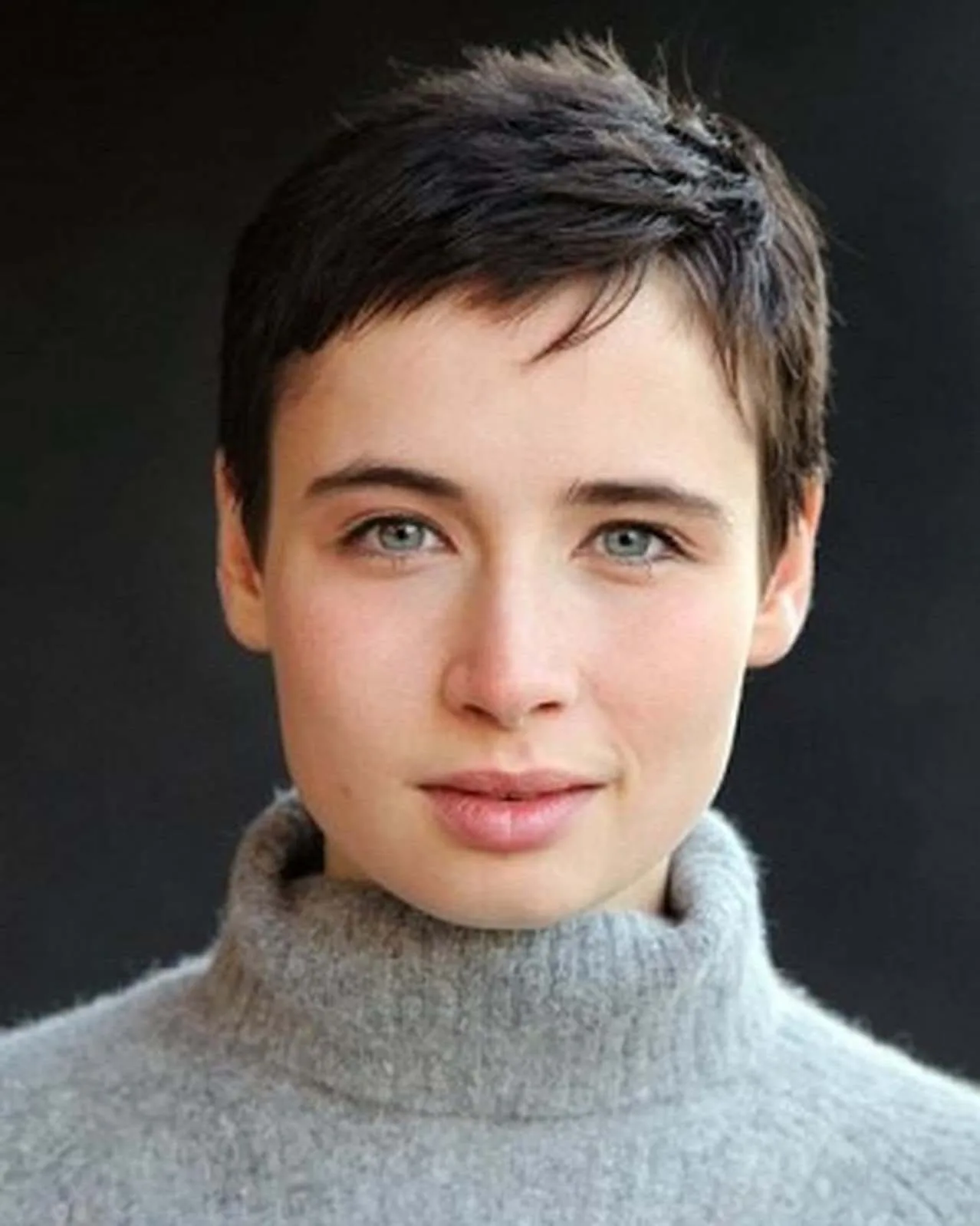
Frenk Maria
Main achievement
Actress. She was a member of the Maxim Gorki Theatre company in Berlin. She appeared in 5 German film productions.
About
Marina Frenk, born in 1986 in Chișinău, Republic of Moldova, is a remarkable actress, musician, and author who has been living in Germany since 1993 with her family. She studied acting from 2005 to 2008 at the Folkwang University of the Arts in Essen, subsequently debuting on important stages such as the Grillo-Theater Essen, Schauspielhaus Bochum, Centraltheater Leipzig, and Schauspiel Köln. Among her notable achievements are the Bochum Theatre Award for Young Artists in 2009, her cinema debut with the film "Totem" (2011), where she also contributed to the music, as well as roles in television productions like "In aller Freundschaft – Die jungen Ärzte." As an author, she published her debut novel "ewig her und gar nicht wahr" in 2020, which received the Literaturförderpreis, and the essay "Ein Versuch sich zu verabschieden" in 2024. Since the mid-2010s, Marina Frenk has been active as a freelance artist, being a member of the Maxim Gorki Theater ensemble in Berlin between 2013 and 2015, where she performed memorable roles in productions such as "Onkel Wanja," "Kinder der Sonne," or her own performance pieces "Valeska Gert – The Animal Show" and "Fuck you Europa, Fuck you Moldova." She has collaborated with musical groups such as the folk-jazz band Kapelsky, the noise-electro band Baba Dunyah, Klezmer-Rock bands The Disorientalists and Di Shkatulkeles, releasing albums and adapting Yiddish poems. In the field of radio, she created and performed the autobiographical Hörspiel "Jenseits der Kastanien" (2016), awarded the CIVIS-Radiopreis for integration, reflecting her migration experience from Moldova to Germany. Marina Frenk's personal life is closely linked to her Moldovan roots from a Jewish-Russian family, experiences explored in her literary and artistic creations, which address themes such as uprooting, multicultural identity, and integration into German society. Although detailed information about her family remains limited in public sources, her trajectory illustrates the resilience of Moldovan women in the European cultural industry, combining theater, film, music, and literature to build a bridge between East and West. Today, at 39 years old, she lives in Berlin and continues to produce innovative content, including press articles and interdisciplinary projects.