 Literature
Esinencu Nicoleta
Main achievement
Playwright. Scholarship at the Solitude Academy in Stuttgart, Germany and scholarship at the Récollets International Accommodation and Exchange Center, Paris
About
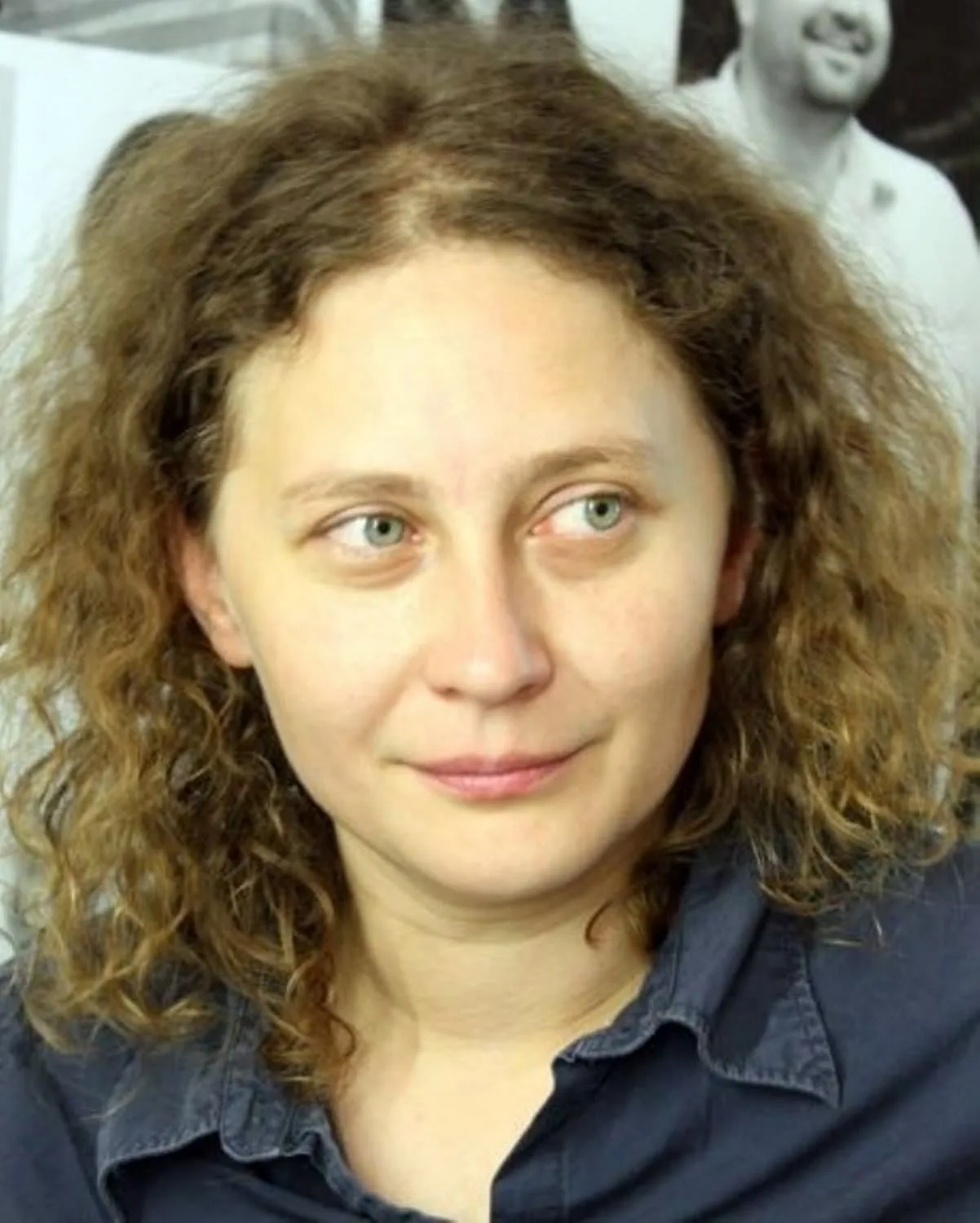
Nicoleta Esinencu, born on December 17, 1978, in Chișinău, is a remarkable Romanian-language playwright, hailing from a family of Bessarabian intellectuals, the daughter of screenwriter and writer Nicolae Esinencu. She studied playwriting and screenwriting at the Moldova State University of Arts, developing in a context marked by the post-Soviet transition, where language and identity became essential political stakes. Her career was built through provocative texts such as "Fuck you, eu.ro.Pa!", which won the special "dramAcum" award in Romania in 2005, sparking intense controversy through its critique of the European Parliament and the post-communist identity crisis, or "How to Write a Play," "The Seventh Kafana" (co-authored with Dumitru Crudu and Mihai Fusu), and "Odessa Transfer." Her achievements extend beyond the borders of the Republic of Moldova, with plays staged in countries such as Romania, Sweden, Germany, France, Austria, Japan, and Russia, and translations into German, English, French, or Polish, published by publishing houses like IDEA in Cluj or L’Arche in France. She is the literary secretary at the "Eugene Ionesco" Theatre in Chisinau and the founder of the independent theatre teatru-spălătorie (2010), an alternative space that closed in 2017 but continues to produce plays critical of post-Soviet and European-global realities, in collaboration with institutions such as HAU Hebbel am Ufer in Berlin or Goethe-Institut. International scholarships, such as the one from Akademie Schloss Solitude (2003, Stuttgart), Récollets (2006, Paris), or DAAD Artists-in-Berlin (2019), have consolidated her visibility, culminating in the International Tabori Award in 2022. Although predominantly active in Chișinău, Nicoleta Esinencu represents an essential female voice in contemporary Romanian dramatic literature, addressing sensitive themes such as discrimination, queer identity, Moldova's role in the history of the Holocaust, or post-Soviet alienation, with plays like "Dear Moldova, can we kiss just a little bit?" or "Requiem for Europe". Her personal life remains discreet in public sources, but her intellectual family legacy and her experience as a witness to geopolitical changes define a path marked by courage and artistic resilience.