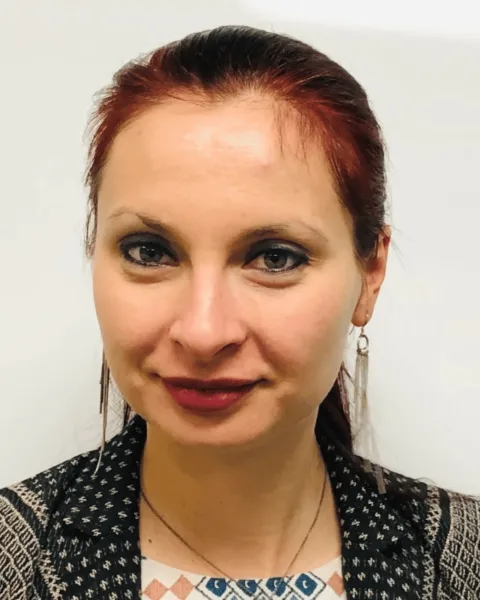
Cotovanu Lidia
Main achievement
Research scientist within the Department of "Sources, Working Tools and Social History", "N. Iorga" Institute of History of the Romanian Academy
About
Lidia Cotovanu is a Scientific Researcher Grade III at the "Nicolae Iorga" Institute of History of the Romanian Academy in Bucharest, a position she has held since February 2017. Born in the village of Cărpineni in the Hâncești district, Republic of Moldova, she has built a prestigious academic career in the field of Southeast European medieval history, particularly in geographical mobility and identity transformations in the region[1][4]. With a multifaceted background, Cotovanu holds a PhD in History and Civilizations, obtained from the prestigious École des Hautes Études en Sciences Sociales in Paris in 2014, under the supervision of Georges B. Dertilis. Her research focuses on several areas of scientific interest: geographical mobility in Southeastern Europe during the 14th–18th centuries, relations between the Romanian principalities and foreign religious institutions, processes of personal and collective identification in the pre-national Romanian principalities and Southeastern Europe, as well as social and bureaucratic practices specific to these areas. She has published numerous studies and scientific articles in prestigious journals, among which stands out the monograph "Émigrer en terre valaque. Estimation quantitative et qualitative d'une mobilité géographique de longue durée (seconde moitié du XIVe – début du XVIIIe siècle)", published in 2022 and awarded the "Nicolae Bălcescu" Prize of the Romanian Academy. In addition to her research activities at the Romanian Academy, Lidia Cotovanu has been involved in numerous international projects and academic collaborations, being an associate member of research centers in France and a reviewer for prestigious scientific journals[1]. Her linguistic knowledge, which includes French, modern and ancient Greek, Latin, Russian, and Italian, has allowed her to access and edit documents from various archival collections in Southeastern Europe, contributing significantly to the advancement of historical knowledge about the region during the medieval and post-Byzantine periods.