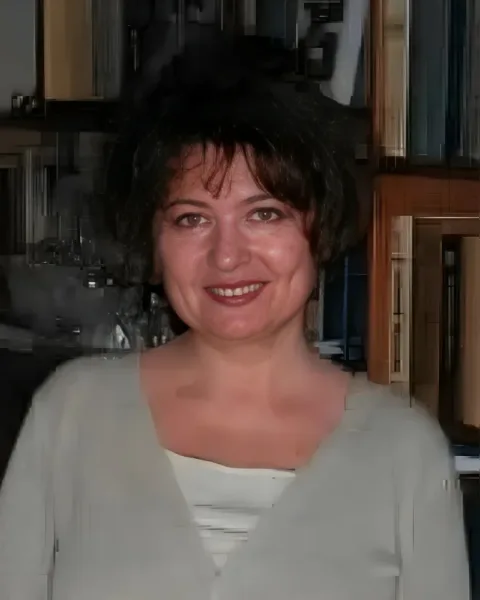
Djionat Elena
Main achievement
Remarkable activist for women's rights in Bessarabia
About
Elena Djionat (born May 8, 1888, Bozieni village, Chișinău – died after 1936) was a remarkable publicist, educator, and activist for women's rights in Bessarabia. Throughout her career, she played a fundamental role in propagating education in the Romanian language and in promoting national values during the transition period between Russian domination and the Great Union. Her activism began as early as 1907, under the Tsarist regime, when she expressed her patriotic convictions by teaching in her mother tongue, an act considered subversive at the time. She completed her education with studies at the "Princess Dadiani" High School in Chișinău and two years at the Faculty of Medicine in Odesa, which she abandoned to dedicate herself to the teaching profession. As an educator and school administrator, Elena Djionat was the principal of the "Princess Elena" Primary School in Chișinău between 1919 and 1935, a period during which she solidified her reputation as a teacher dedicated to the nationalization of education. Alongside her pedagogical work, she became deeply involved in the feminist movement in Bessarabia, co-founding and presiding over the Organization of Bessarabian Women from 1928, which was later reorganized under the name League of Bessarabian Women in 1933. Under her leadership, the organization established several important social institutions, including shelters for intellectual women, a night shelter, a shelter for street children, and a commercial gymnasium for girls. Between 1933 and 1934, she supported the bimonthly publication "Feminist Movement," an organ for the movement advocating for equal rights. At the founding congress of the League of Bessarabian Women in 1933, Elena Djionat mobilized to draft a motion addressed to King Carol II, demanding equal rights regardless of sex or social status and the elimination of restrictions on women's education. Her commitment to the feminist cause was recognized nationally, with the League of Bessarabian Women being invited in 1934 to host the XIIth Congress of the Federation of Romanian Women's Unions under the patronage of Queen Maria. Although her activity ceased after 1936, Elena Djionat's legacy remains essential in the history of the social movement and the struggle for rights in Bessarabia.